
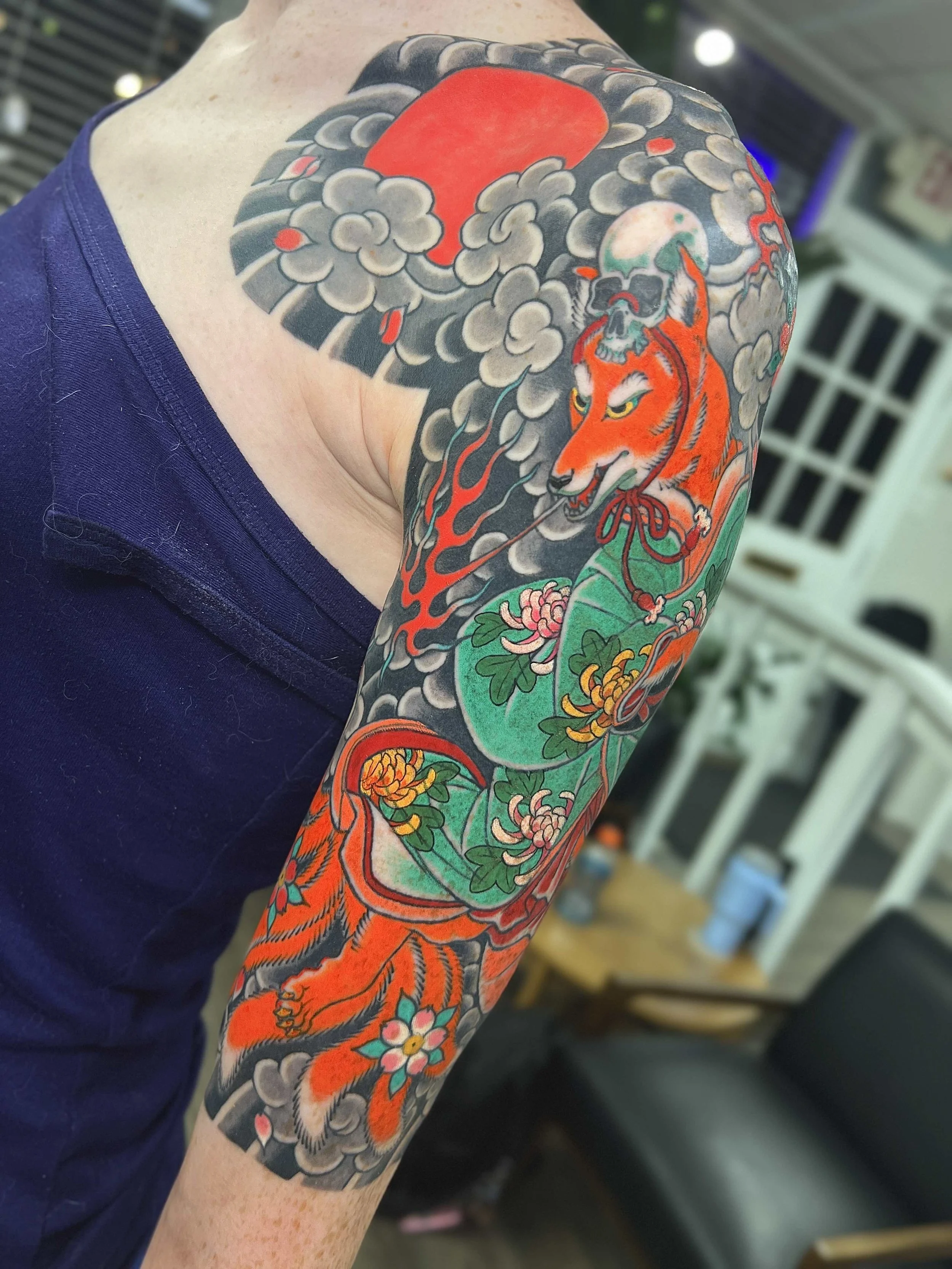
Japanese Tattoo Artist in Atlanta · Wes Holland
Custom Japanese tattoos by Wes Holland, specializing in bold sleeves, back pieces, and single-session work designed for flow and longevity on all skin tones.
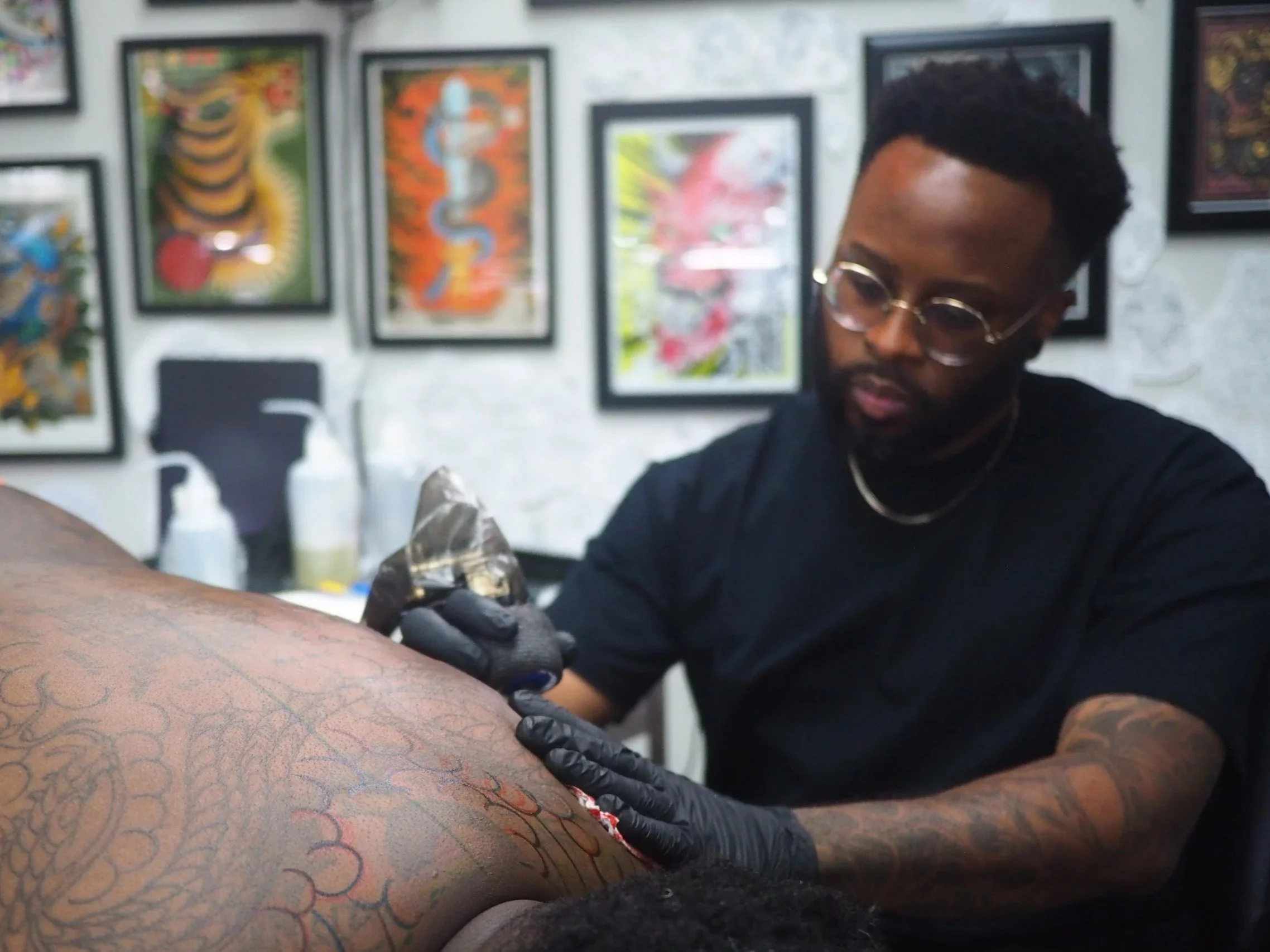
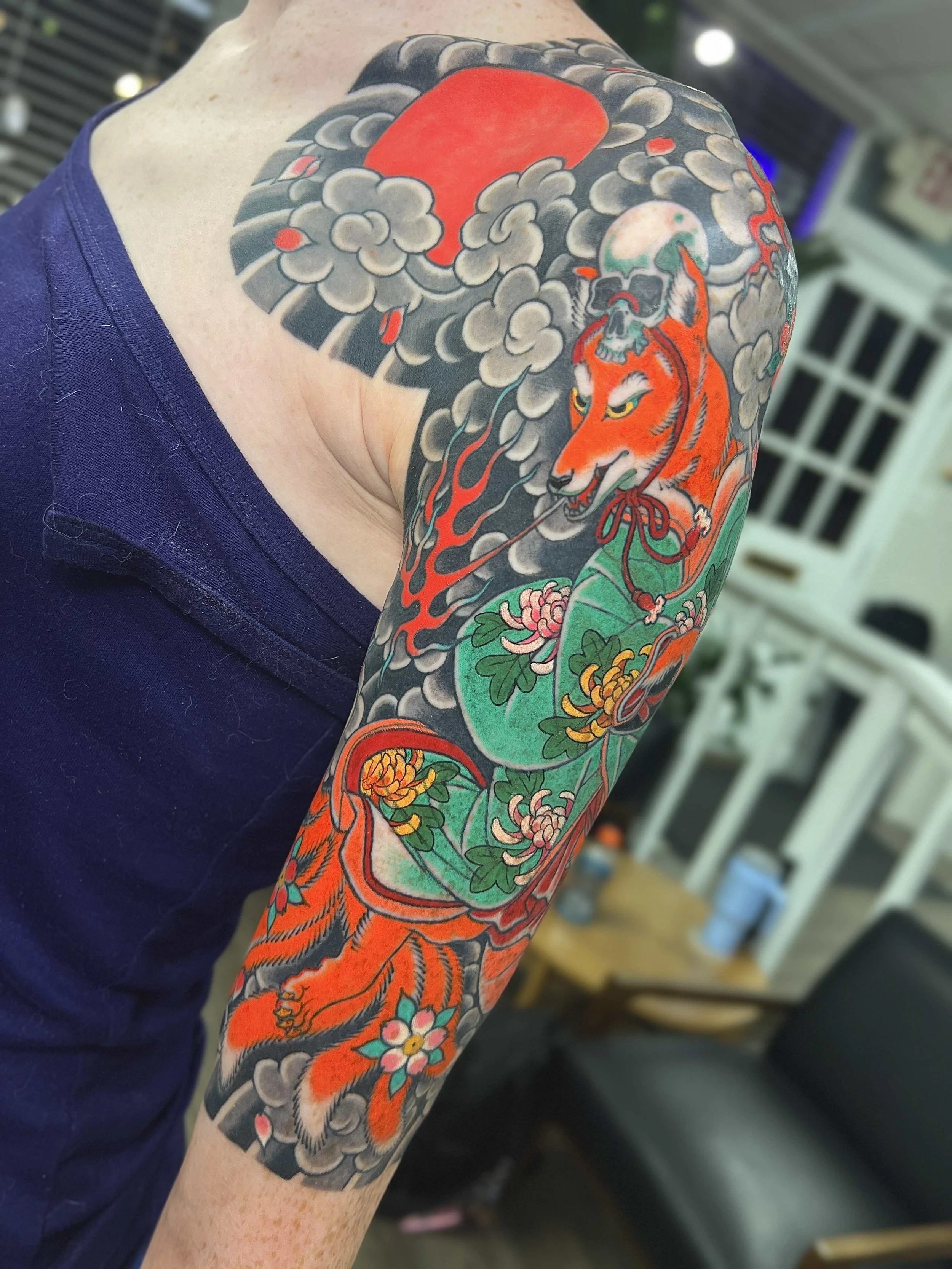
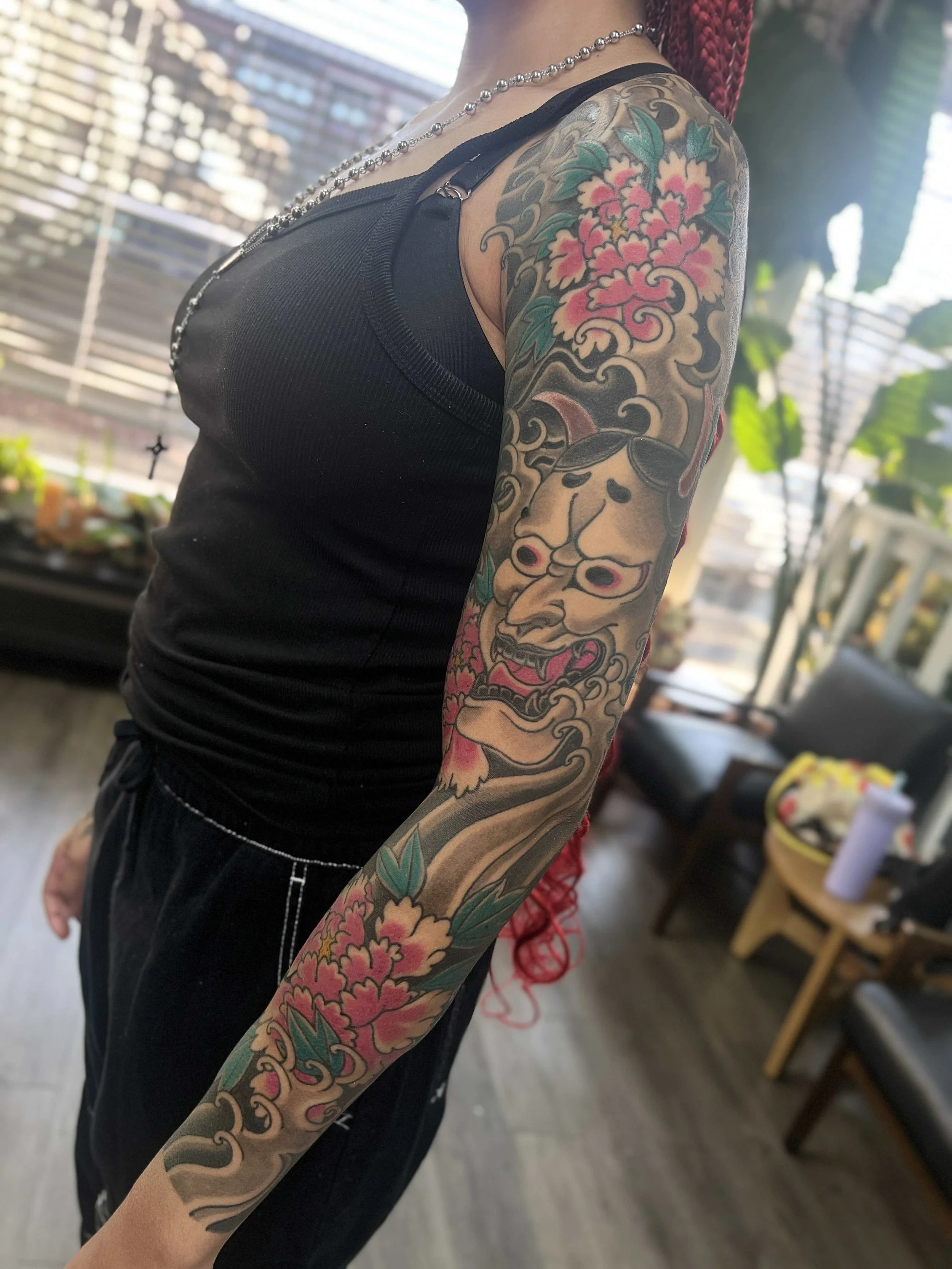
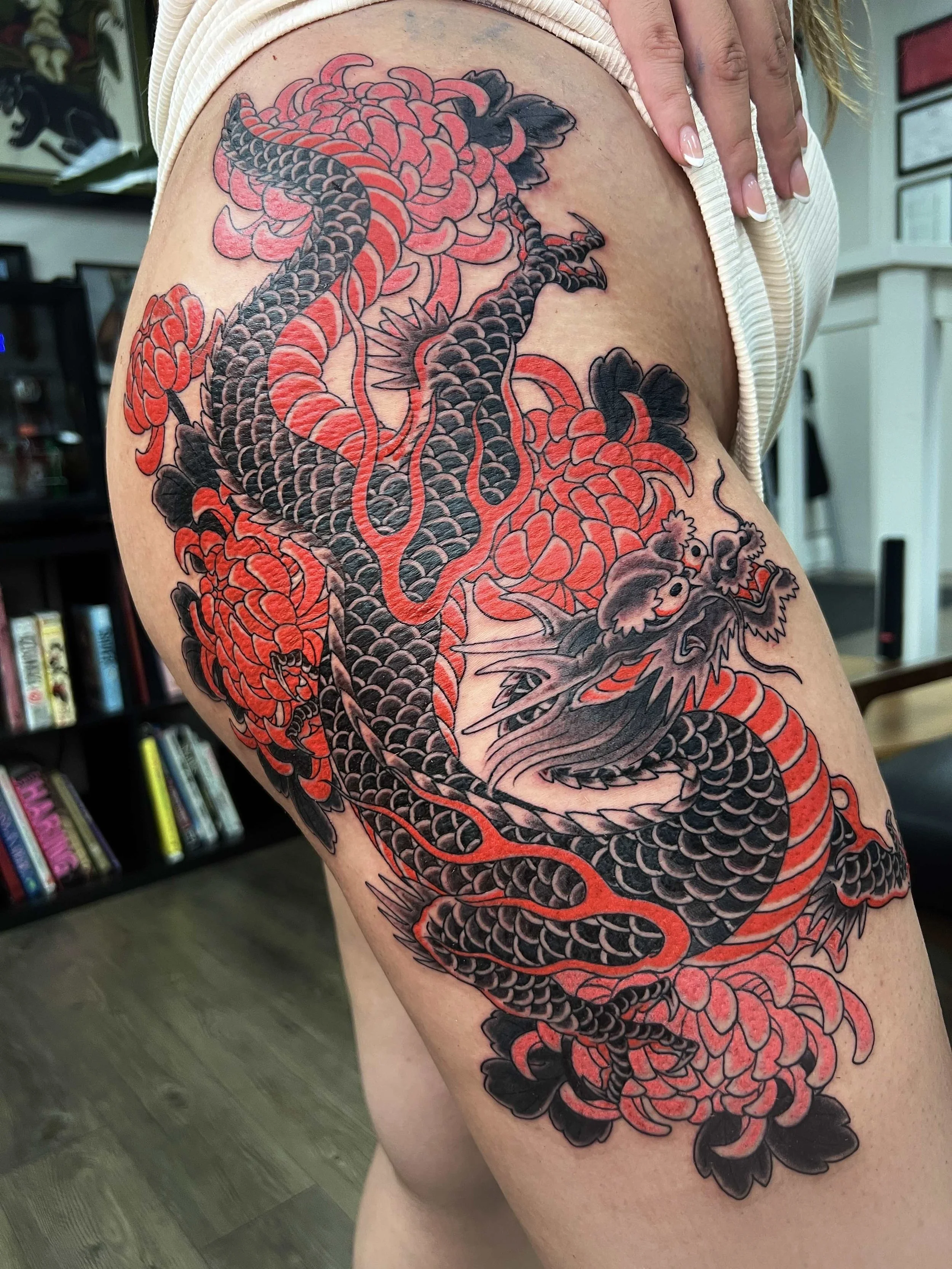
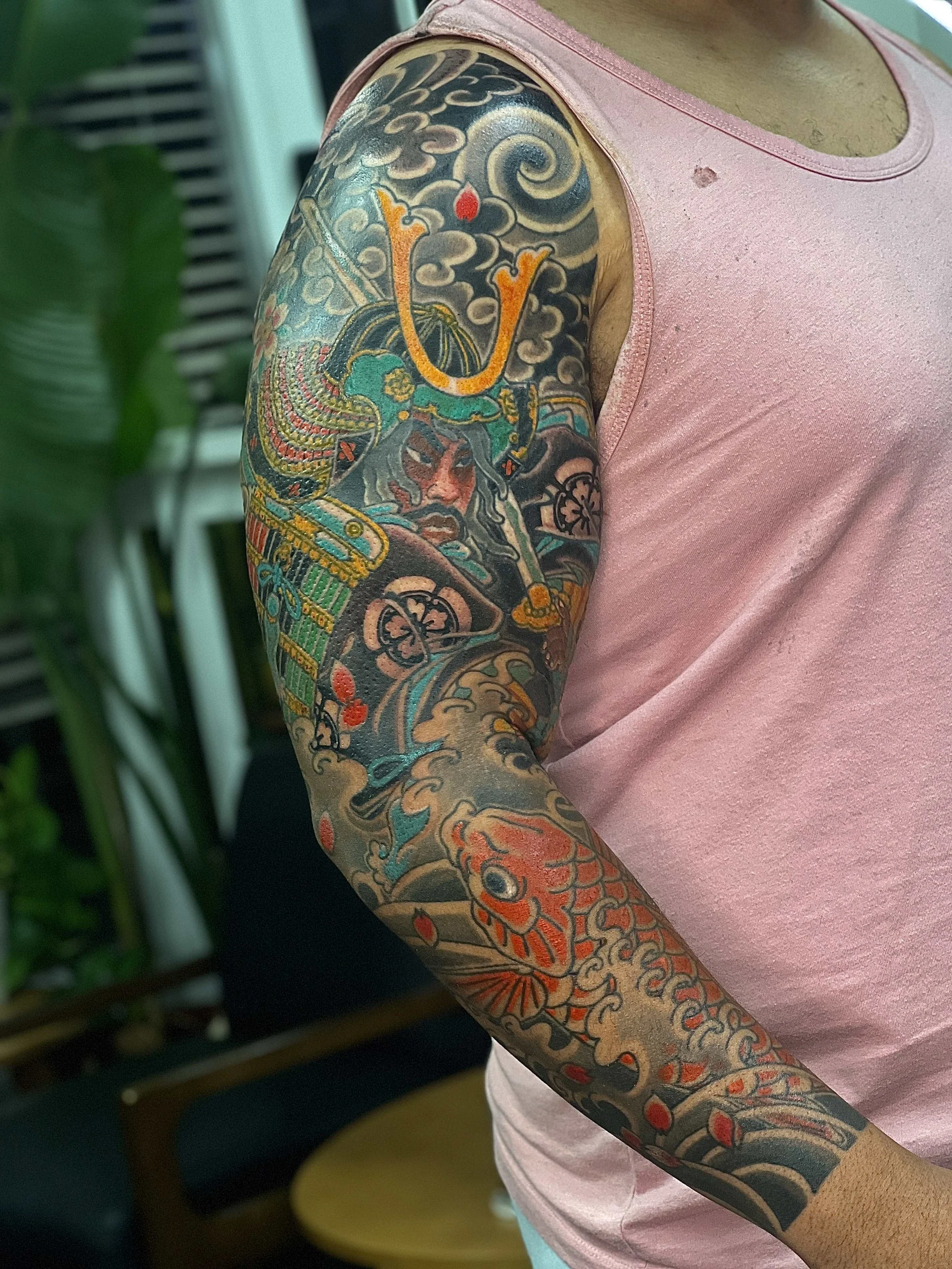
Featured Japanese Tattoo Portfolio
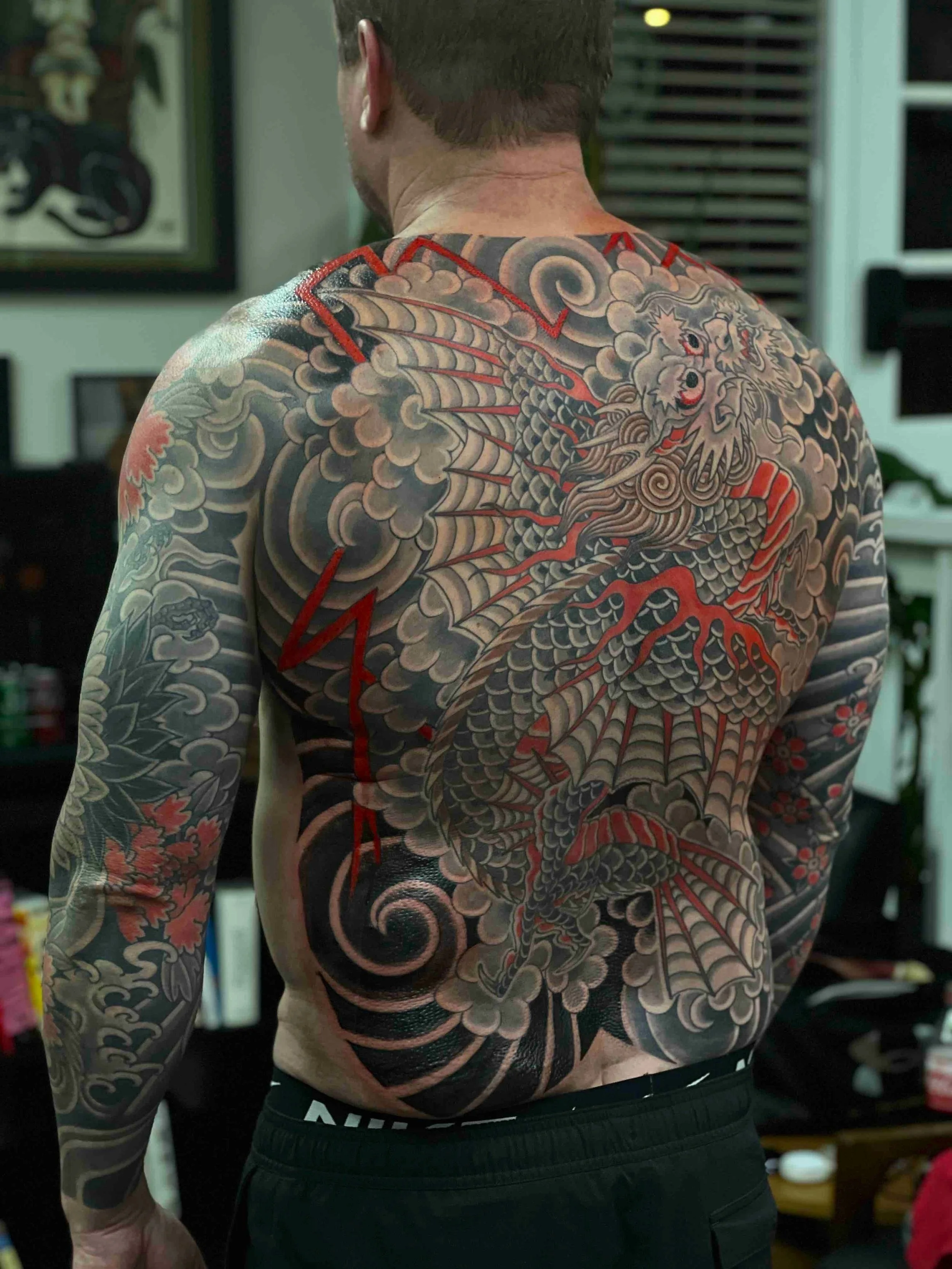
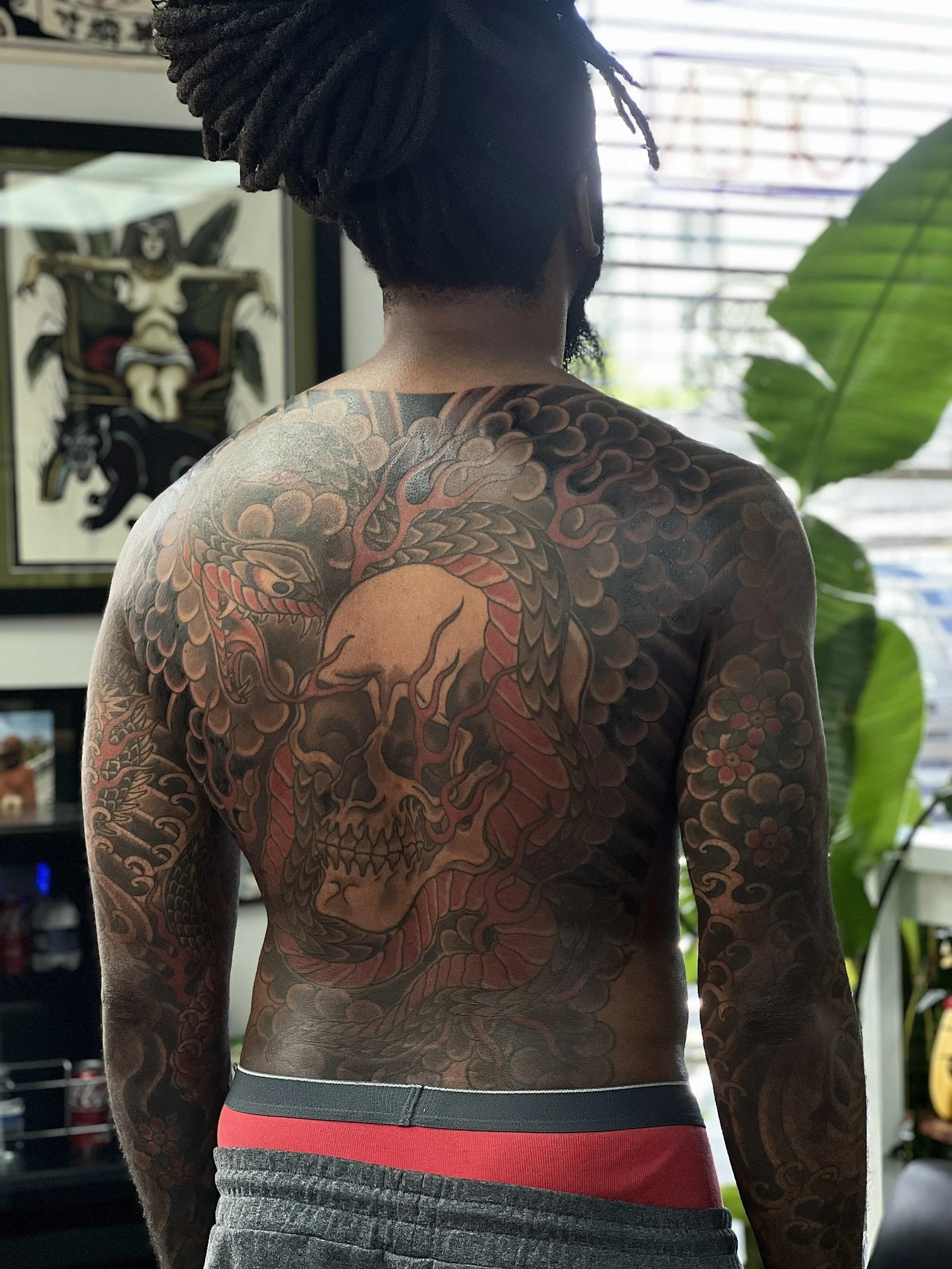
Meet Wes Holland
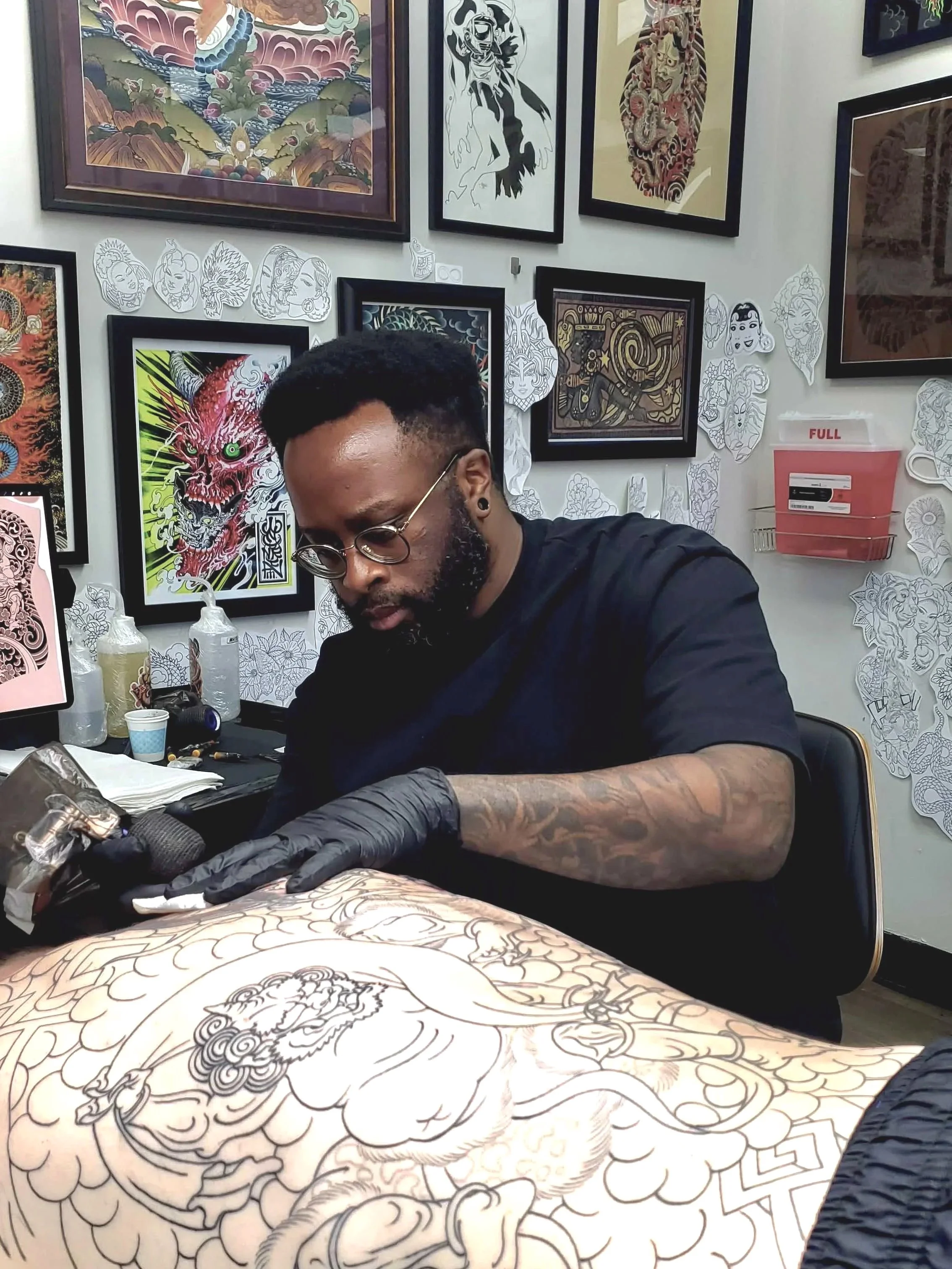
Japanese Style Tattoo Artist in Atlanta
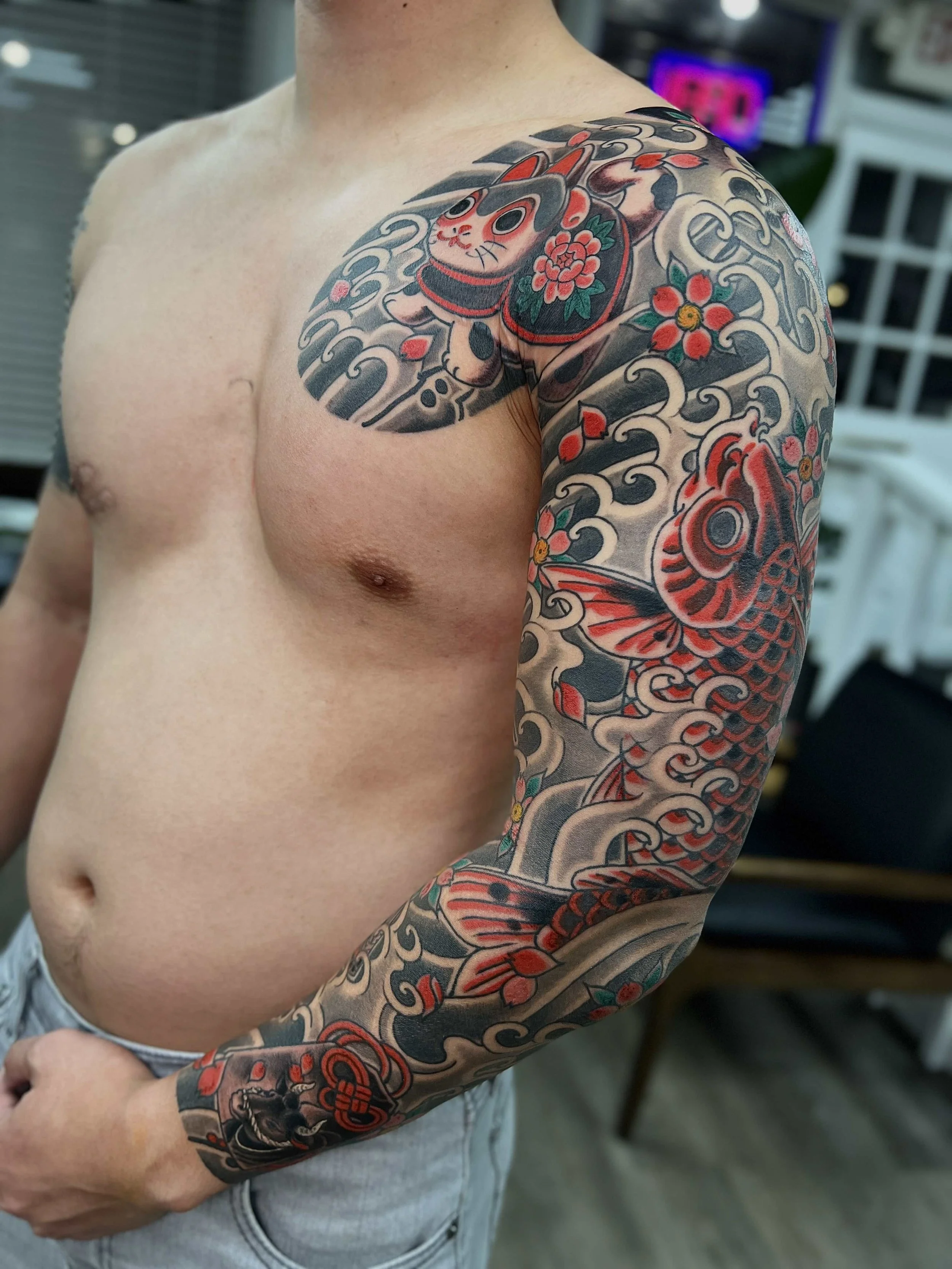
Atlanta tattoo artist Wes Holland is known for bold Japanese tattoo compositions and large-scale custom work. His tattoos emphasize strong structure, clean linework, and imagery designed to remain clear and readable for decades on all skin tones.
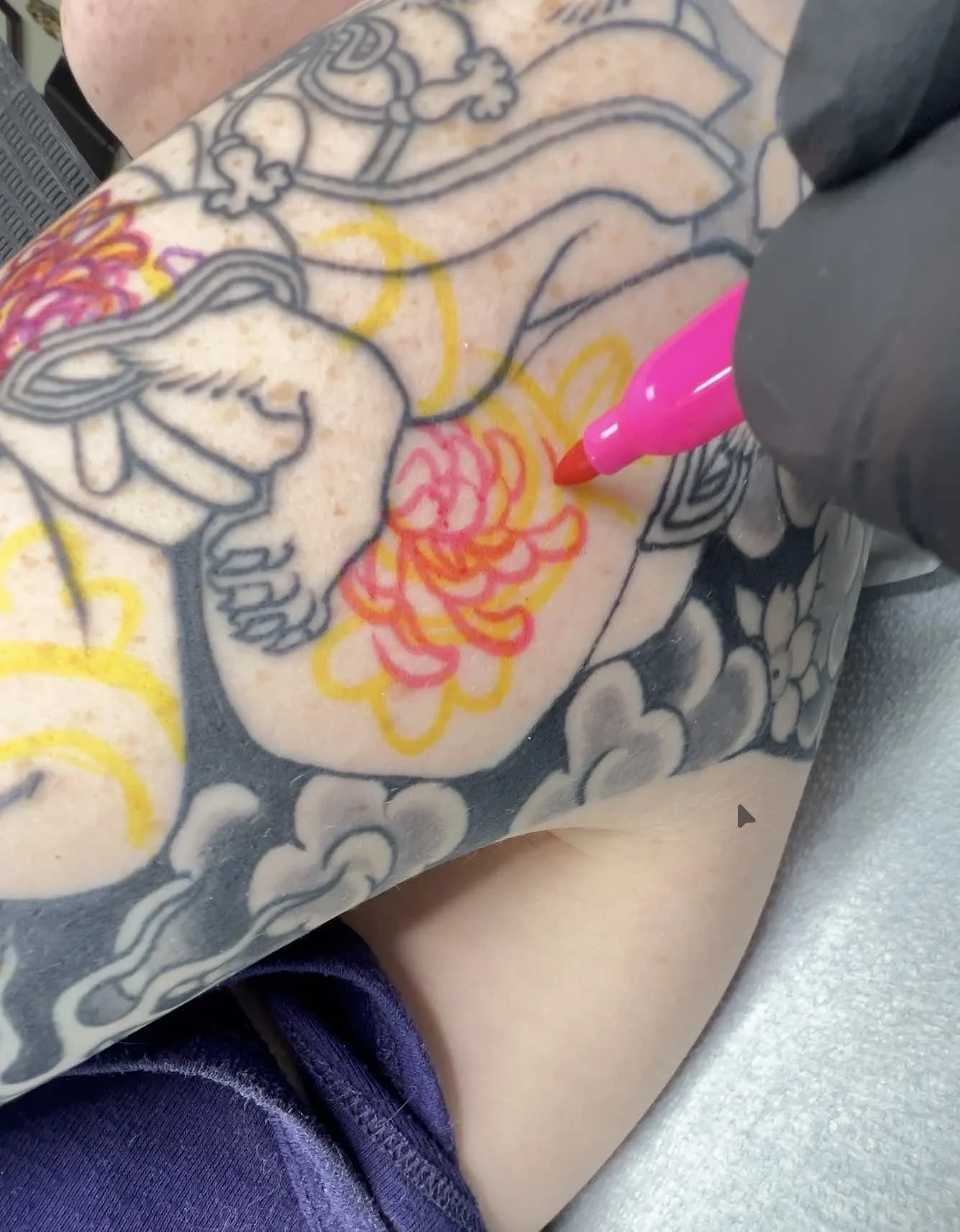
Specializing in Large-Scale Irezumi-Inspired Tattoos
Japanese tattooing works best when the design has space to develop across the body. Wes specializes in large tattoos such as:
Full sleeve tattoos
Half sleeve tattoos
Back pieces
Chest panels
These larger compositions allow traditional imagery such as dragons, koi fish, samurai, and tigers to interact with background elements like waves, wind bars, and clouds.
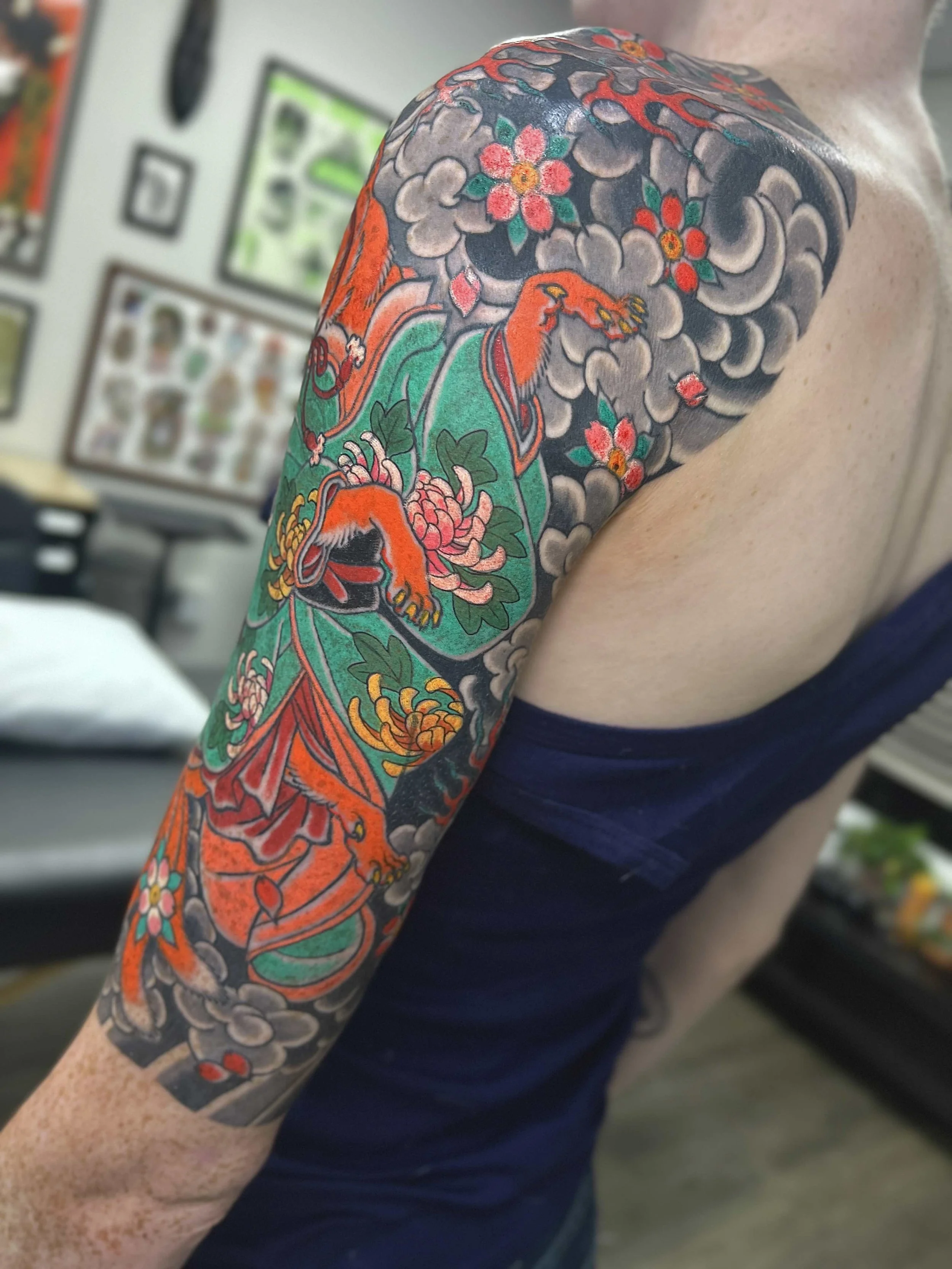
Intentionally Designed as Cohesive Layouts
Rather than placing individual images randomly, Wes designs tattoos so that the composition flows with the anatomy of each client. This creates a cohesive design that looks balanced from multiple angles.
Tattoo sessions take place at Lightwork Tattoo in Sandy Springs, a modern studio serving clients throughout metro Atlanta.
Wes Holland Designs Japanese Tattoos That Flow With the Body
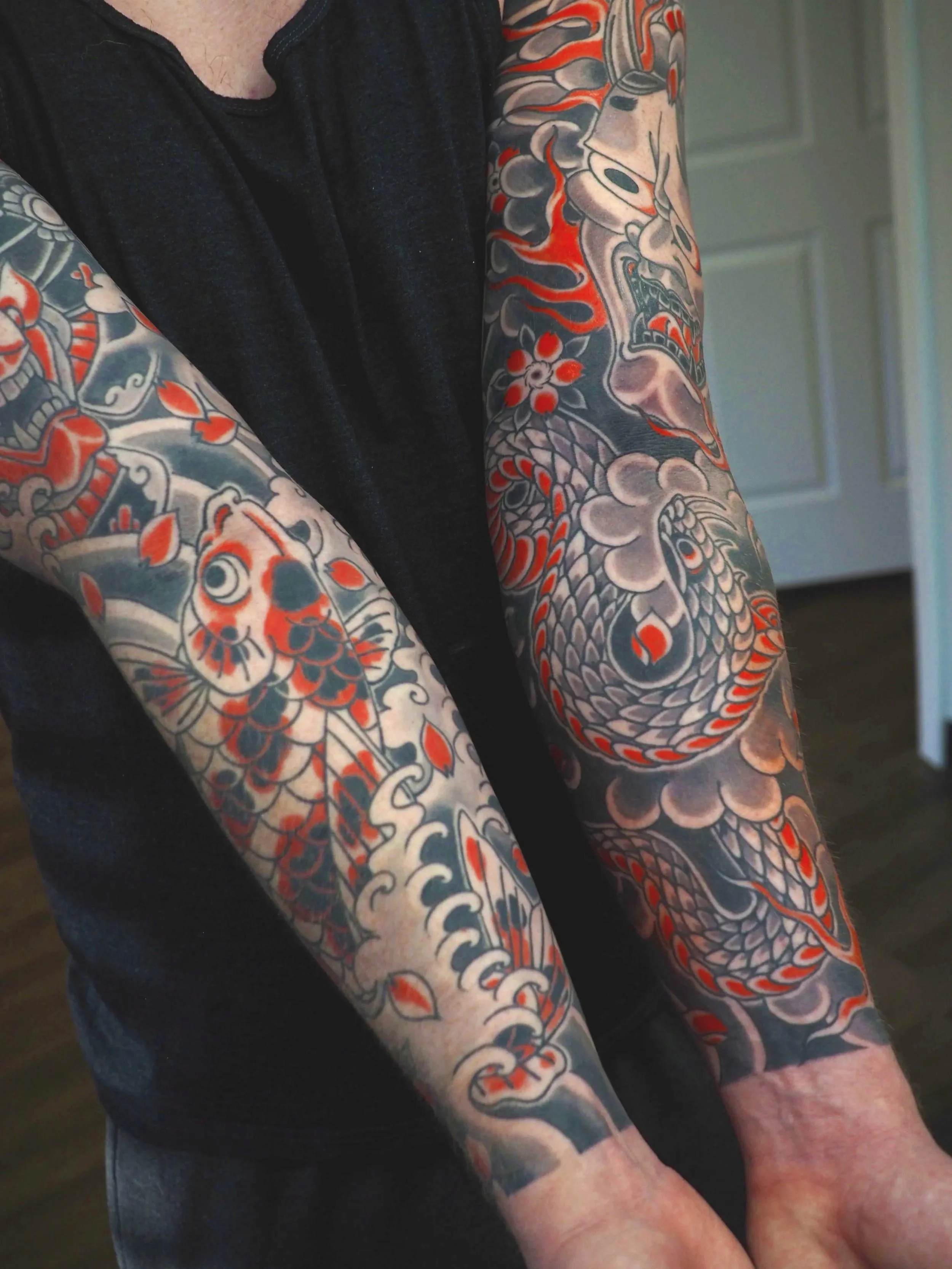
Japanese tattooing is built around the relationship between imagery, movement, and placement on the body. Each design is developed with the goal of creating a balanced composition that remains visually strong over time.
Composition & Flow
Large Japanese tattoos should move naturally across the body. Elements are arranged so the design follows the contours of the arm, chest, or back rather than appearing as separate pieces.
This approach creates tattoos that look balanced whether the body is relaxed or in motion.
Traditional Japanese Imagery
Japanese tattooing draws from centuries of artistic tradition and mythology. Many designs feature powerful imagery such as dragons, koi fish, samurai, tigers, and legendary folklore figures.
These elements are often combined with background motifs like:
Waves & rocks
Clouds
Wind bars
Floral elements: Cherry blossoms, peonies, etc
These details are essential in setting the theme for the main motifs and connect the design into a cohesive composition.
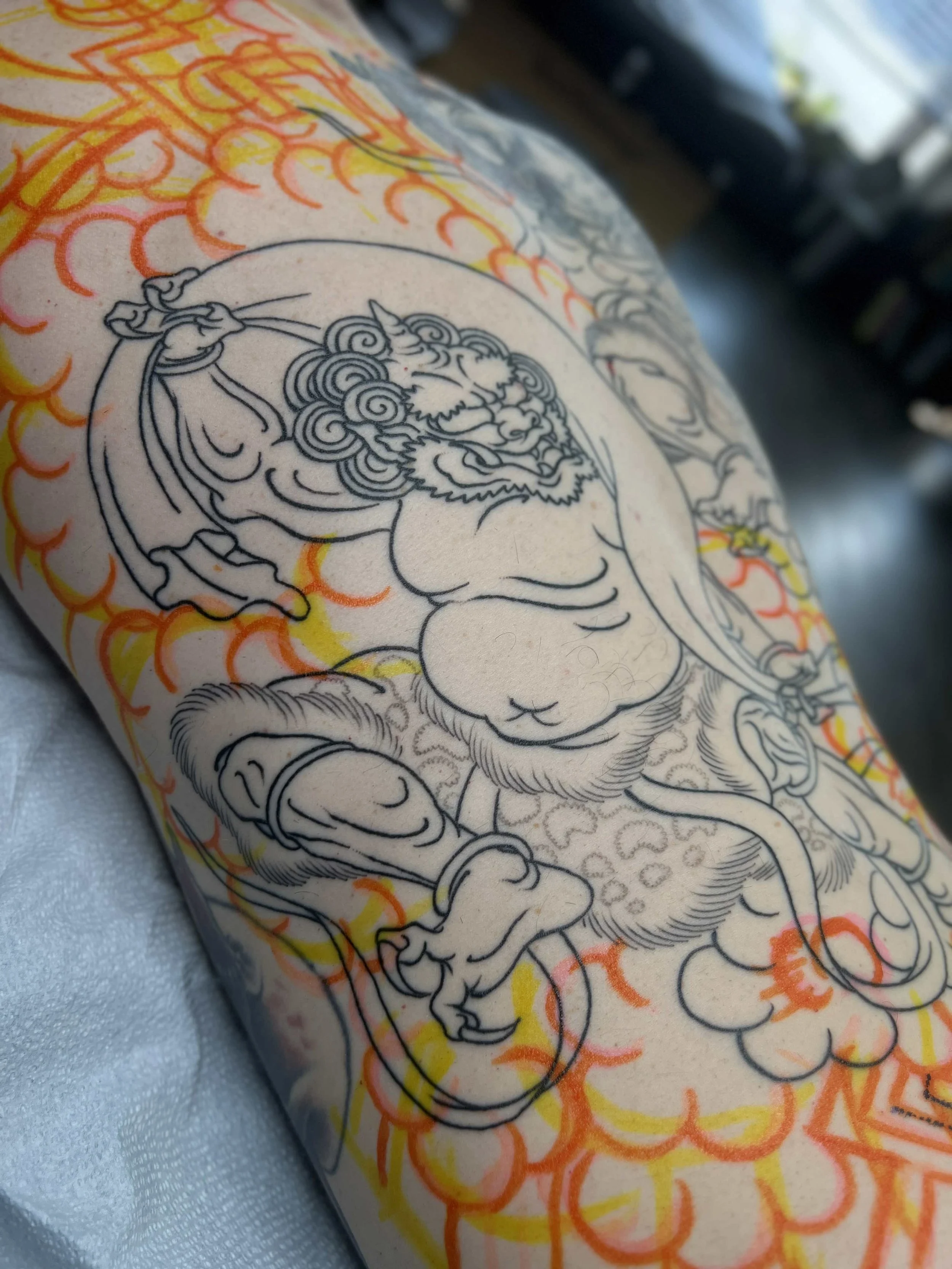
Designing Tattoos That Last
A well-designed tattoo should still look strong years after it heals. Japanese tattooing relies on bold linework, balanced shading, and deliberate color placement to maintain clarity over time.
This approach helps ensure the tattoo remains readable as the skin naturally ages.
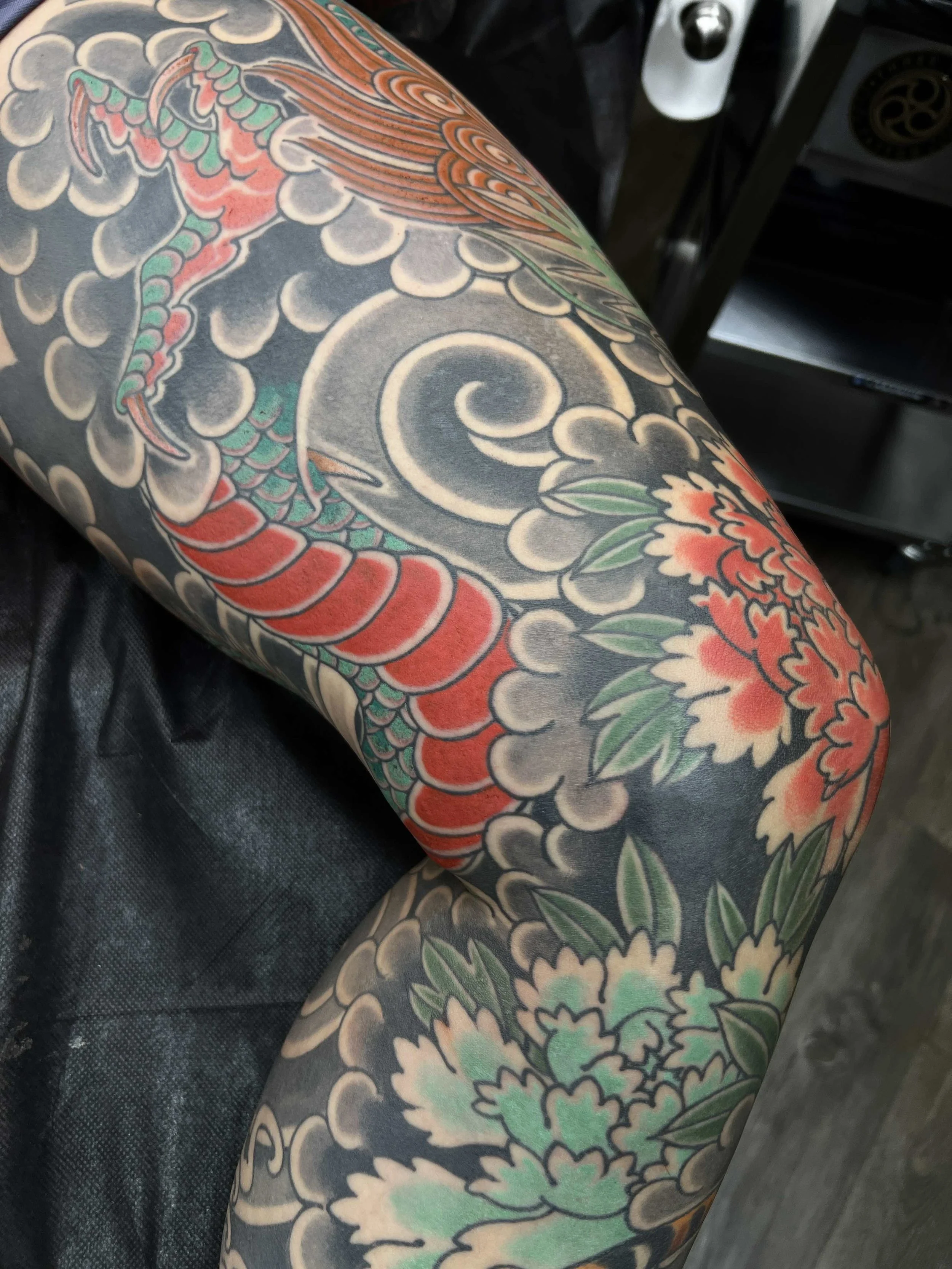
Large-Scale Storytelling
Japanese tattooing often tells a visual story across a larger area of the body. Sleeves and back pieces provide enough space for multiple elements to interact within a unified design.
These larger compositions allow imagery and background textures to flow together rather than feeling crowded.
Popular Japanese Tattoo Designs
Japanese tattooing is known for bold imagery, large-scale composition, and graphic storytelling.
Wes Holland specializes in Japanese tattoos designed to flow with the body and maintain clarity over time.
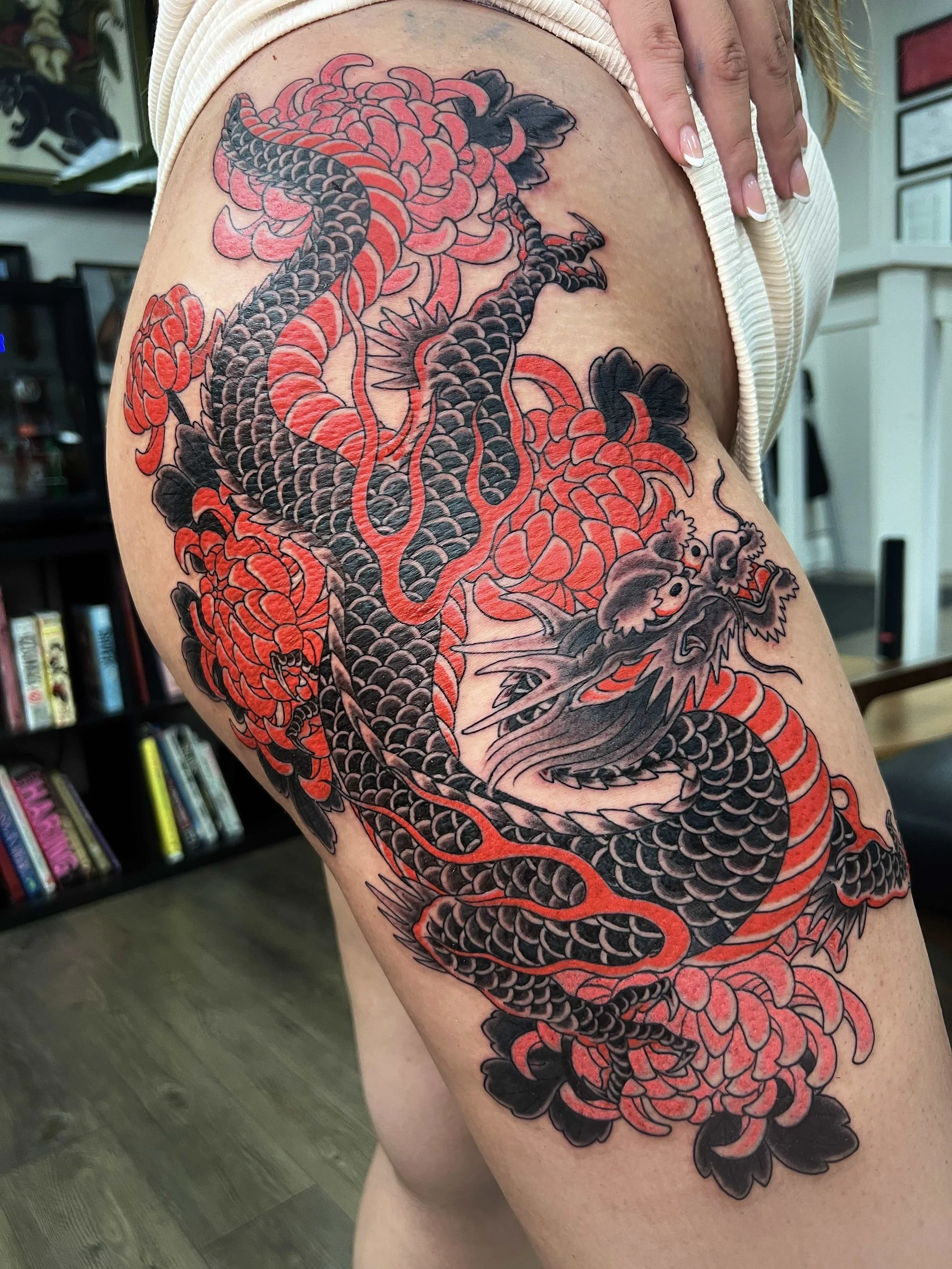
Dragon Tattoos
Dragon tattoos symbolize power, wisdom, and protection. In Japanese folklore, dragons are often associated with water and storms.
These tattoos are frequently designed as flowing sleeve compositions that wrap around the arm with clouds or waves, and can be paired with all 4 main japanese seasonal flowers (cherry blossom, peony, maple, & chrysanthemum).
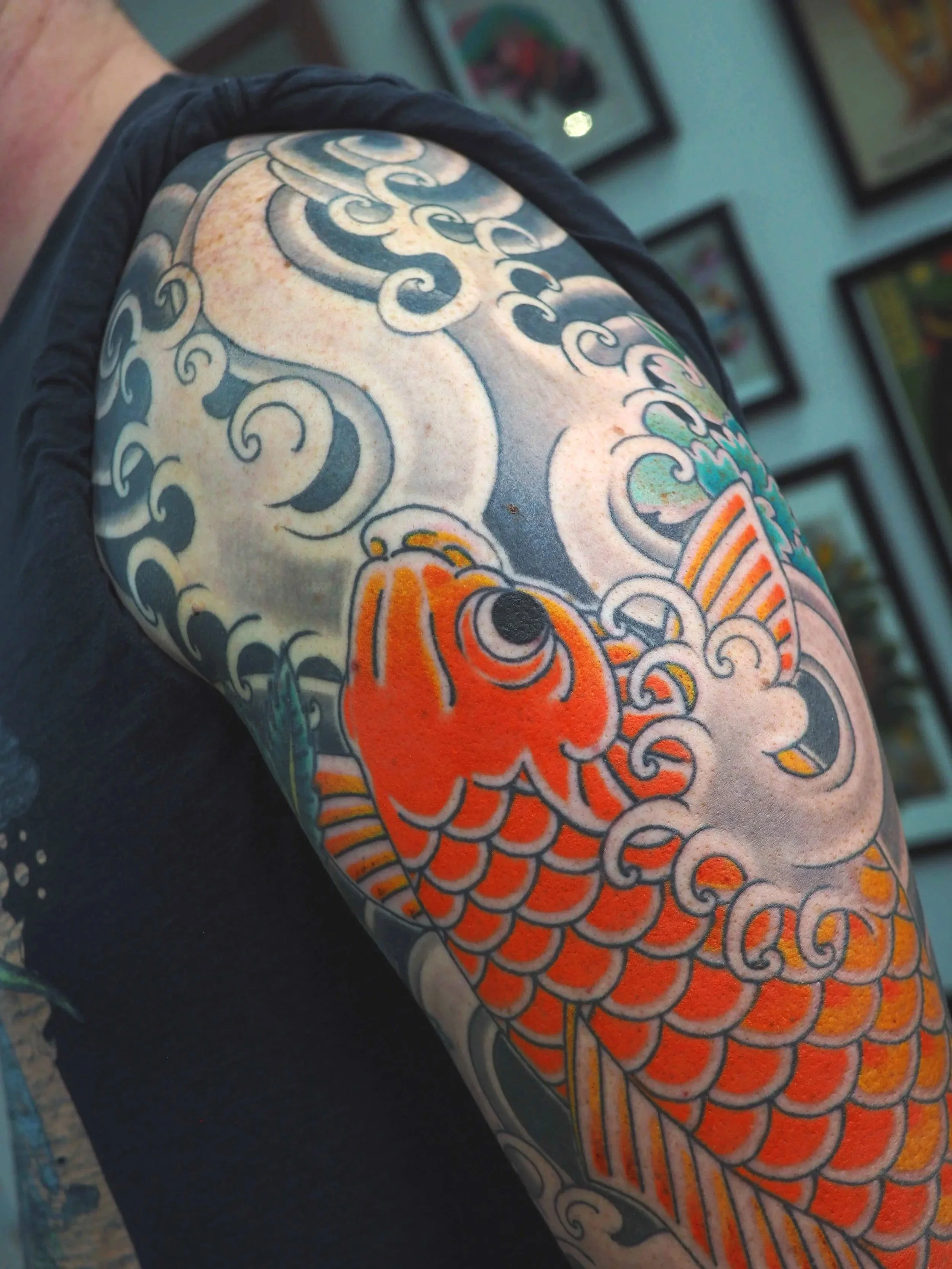
Koi Tattoos
Koi fish represent perseverance and transformation. According to legend, koi that swim upstream in the Yellow River and pass through the Dragon Gate become dragons.
Koi tattoos often appear in sleeve, leg, and full back compositions with turbulent streams of water and can be paired seasonally with cherry blossoms, peonies, or maple leaves.
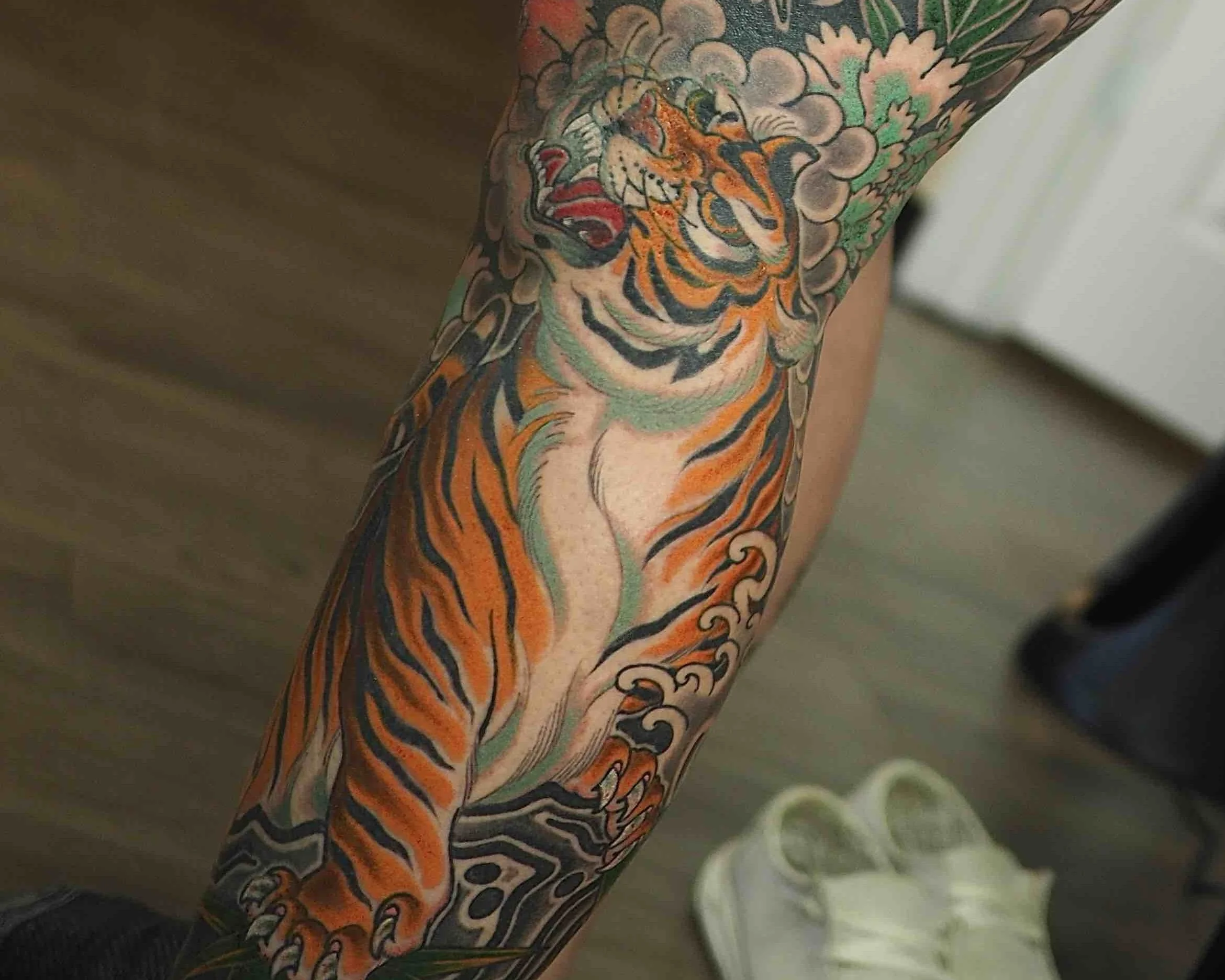
Tiger Tattoos
Tiger tattoos symbolize courage and protection. In Japanese art, the tiger is often depicted standing strong through turbulent winds, amongst bamboo or swirling clusters of cherry blossoms.
Tigers often serve as powerful focal points in sleeves and back pieces; and a common motif for large-scale projects is the battle between dragons, the king of mythological beasts, and tigers, the king of earthly beasts.
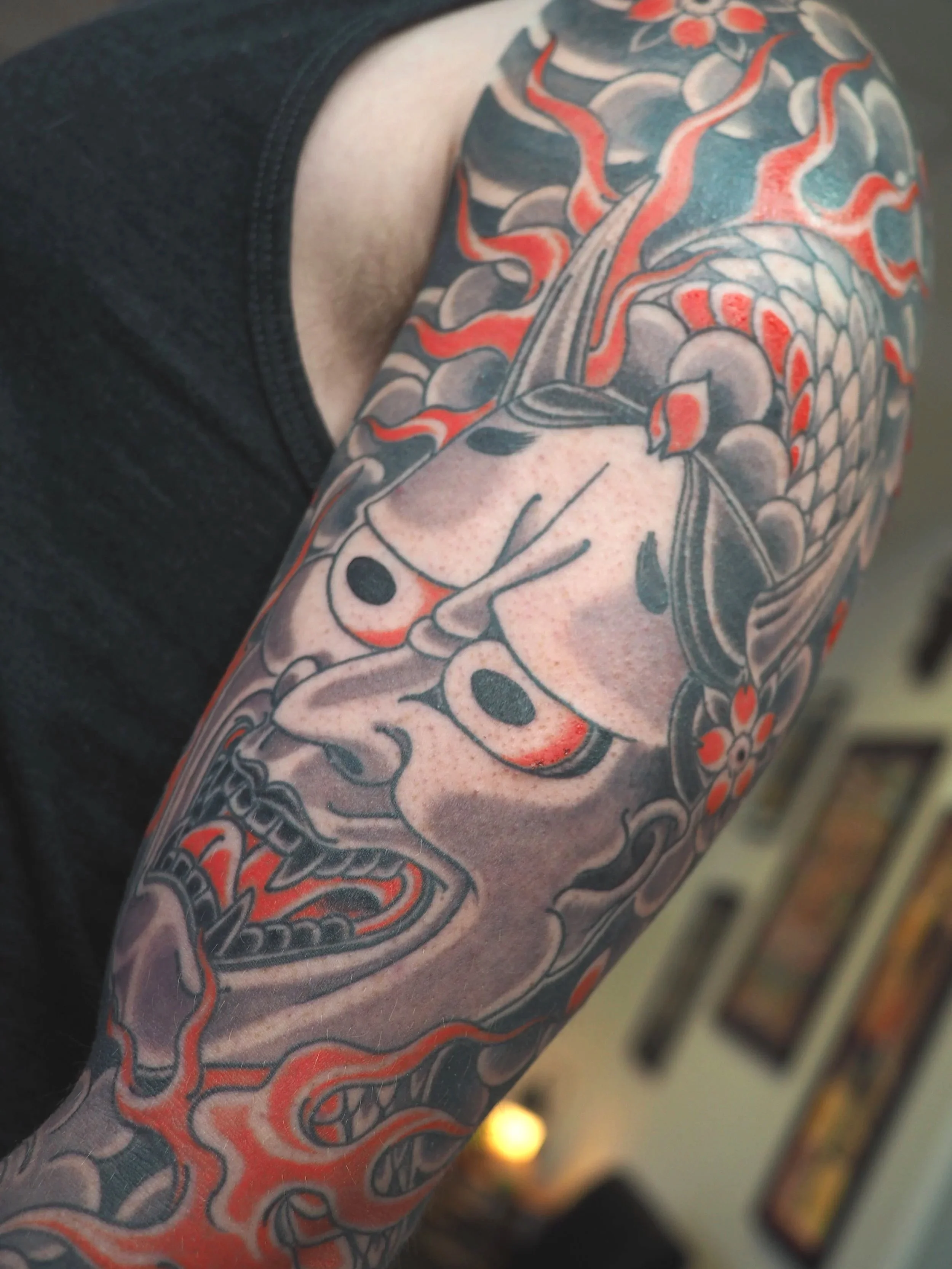
Hannya Mask Tattoos
Hannya masks represent intense human emotions and transformation in Japanese theater and folklore.
In tattooing, they are often combined with floral, snake, or other masks to create dramatic compositions
Japanese Sleeve Tattoos
Japanese tattooing is particularly well suited to larger designs that can flow across the body.
Rather than isolated images, sleeve tattoos allow multiple elements to interact within a cohesive composition
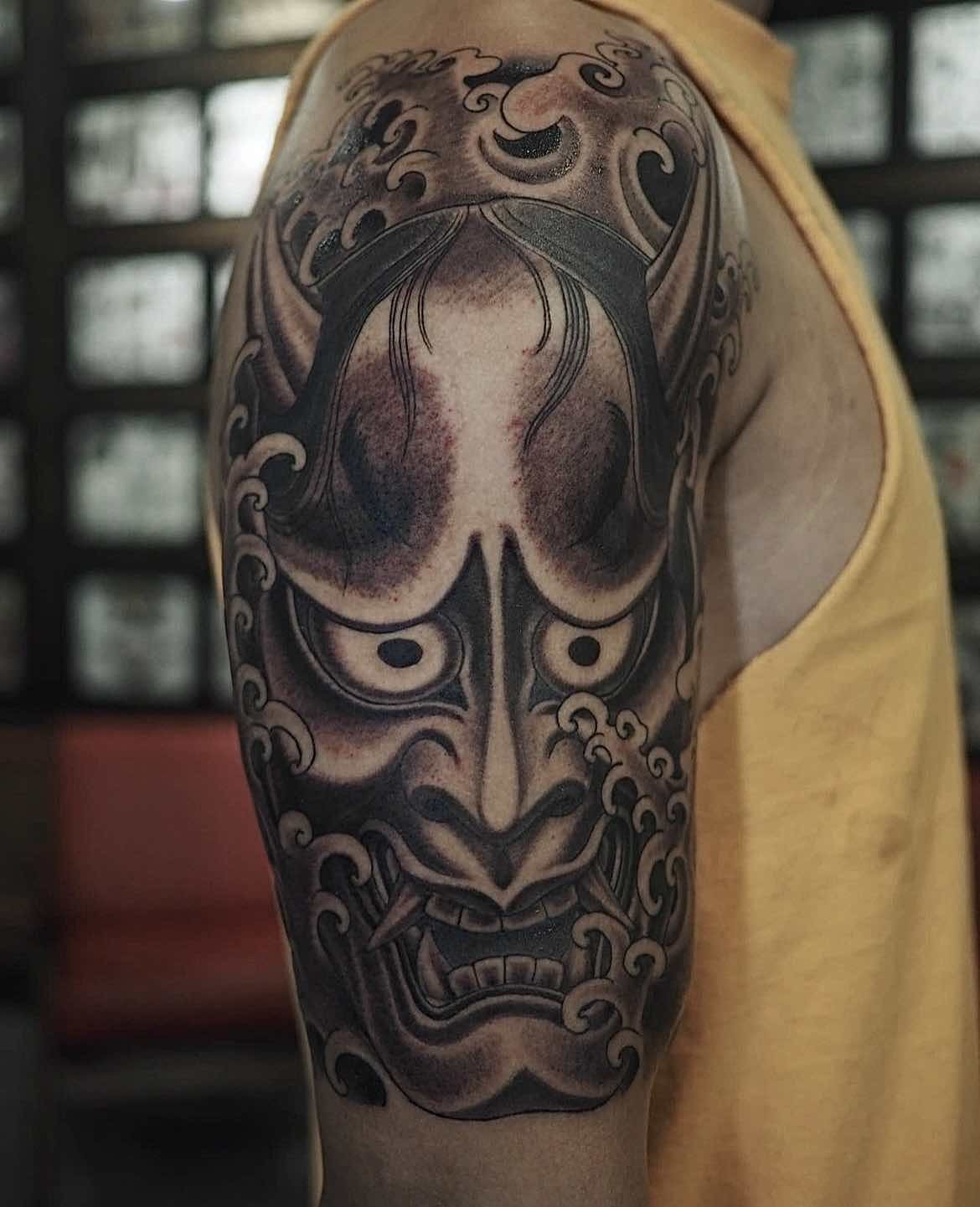
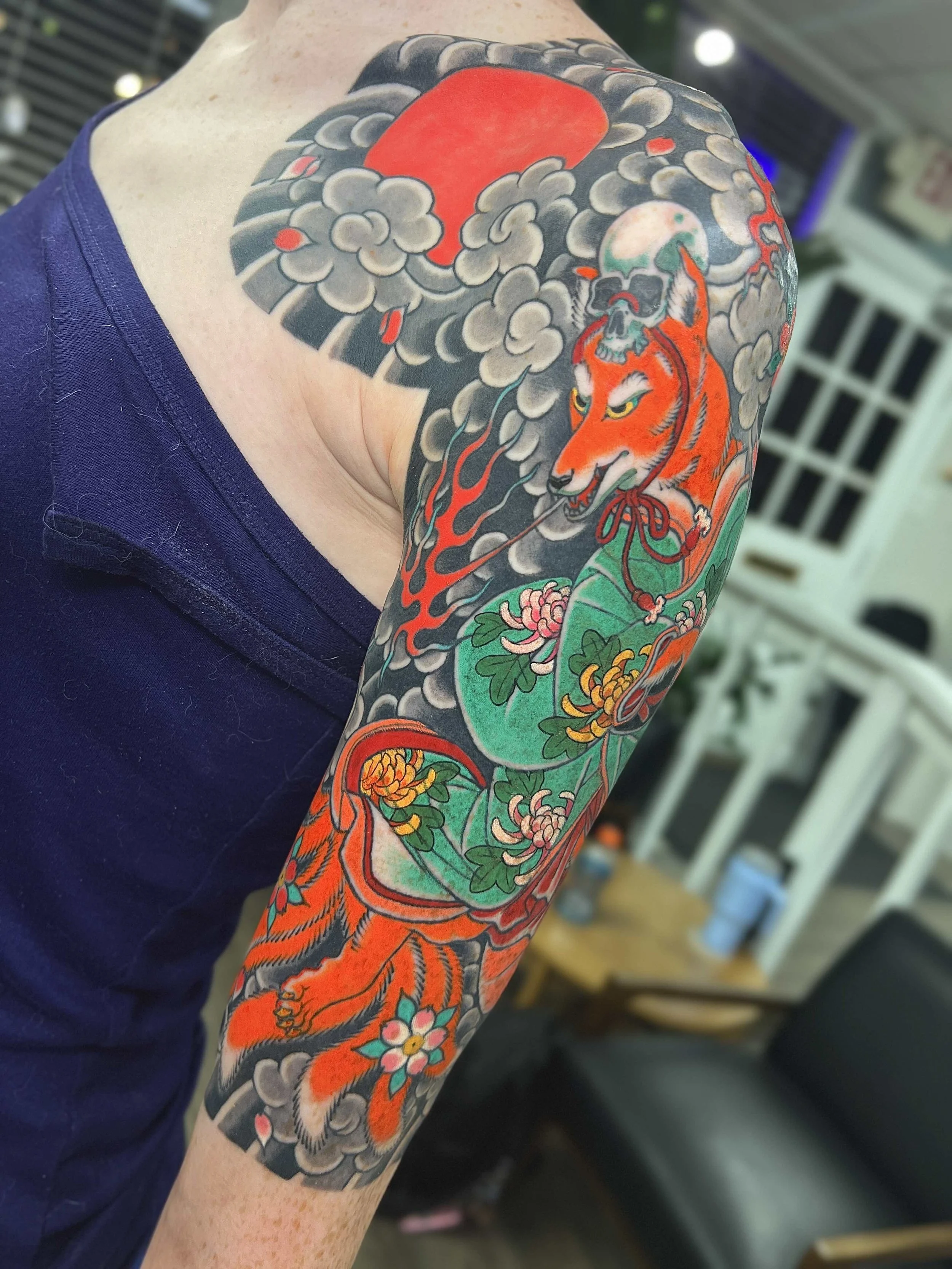
Half Sleeve Tattoos
Half sleeves typically extend from the shoulder to the elbow or from the elbow to the wrist.
These tattoos allow a strong central design while still maintaining the visual impact of a larger piece.
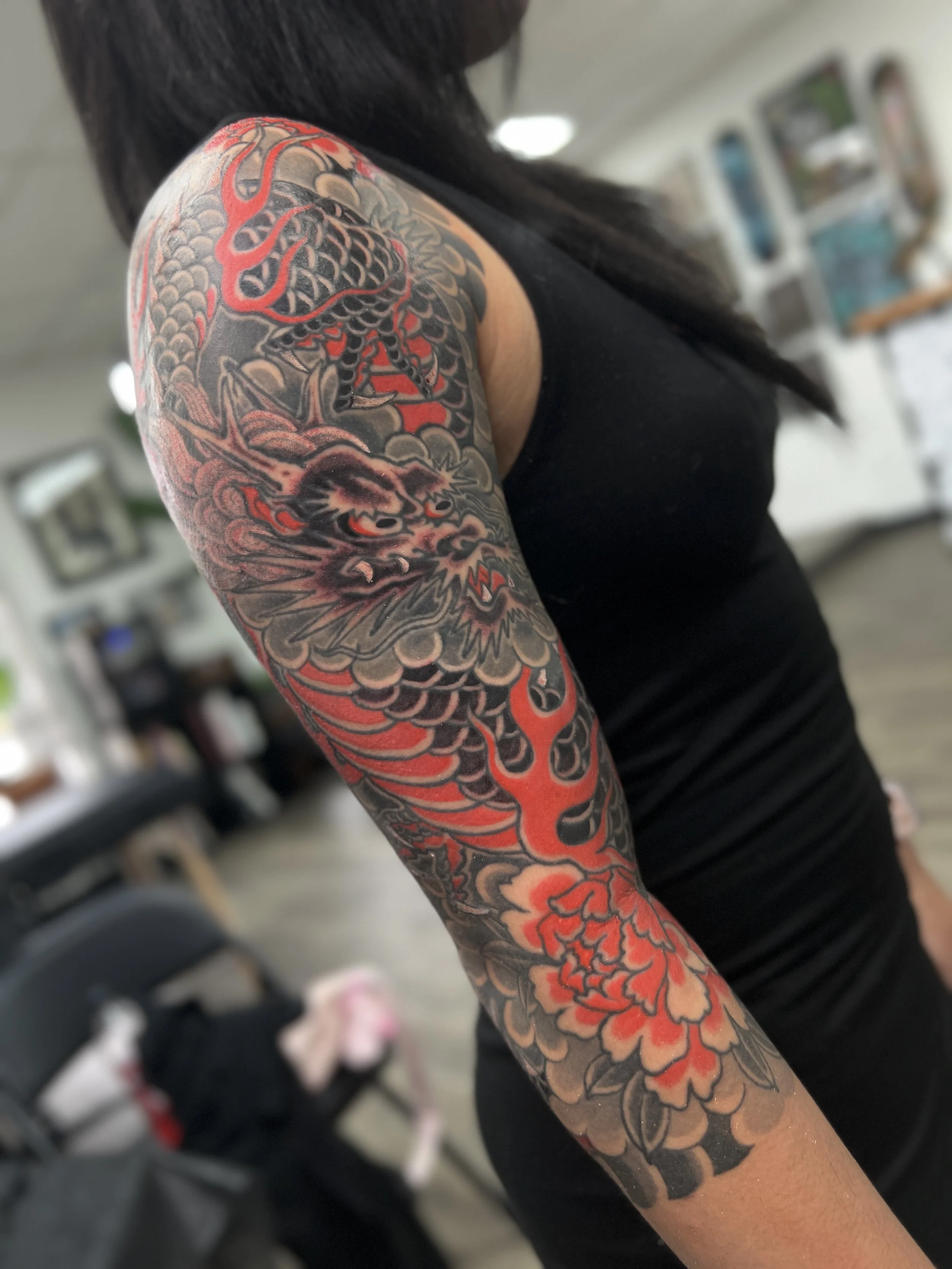
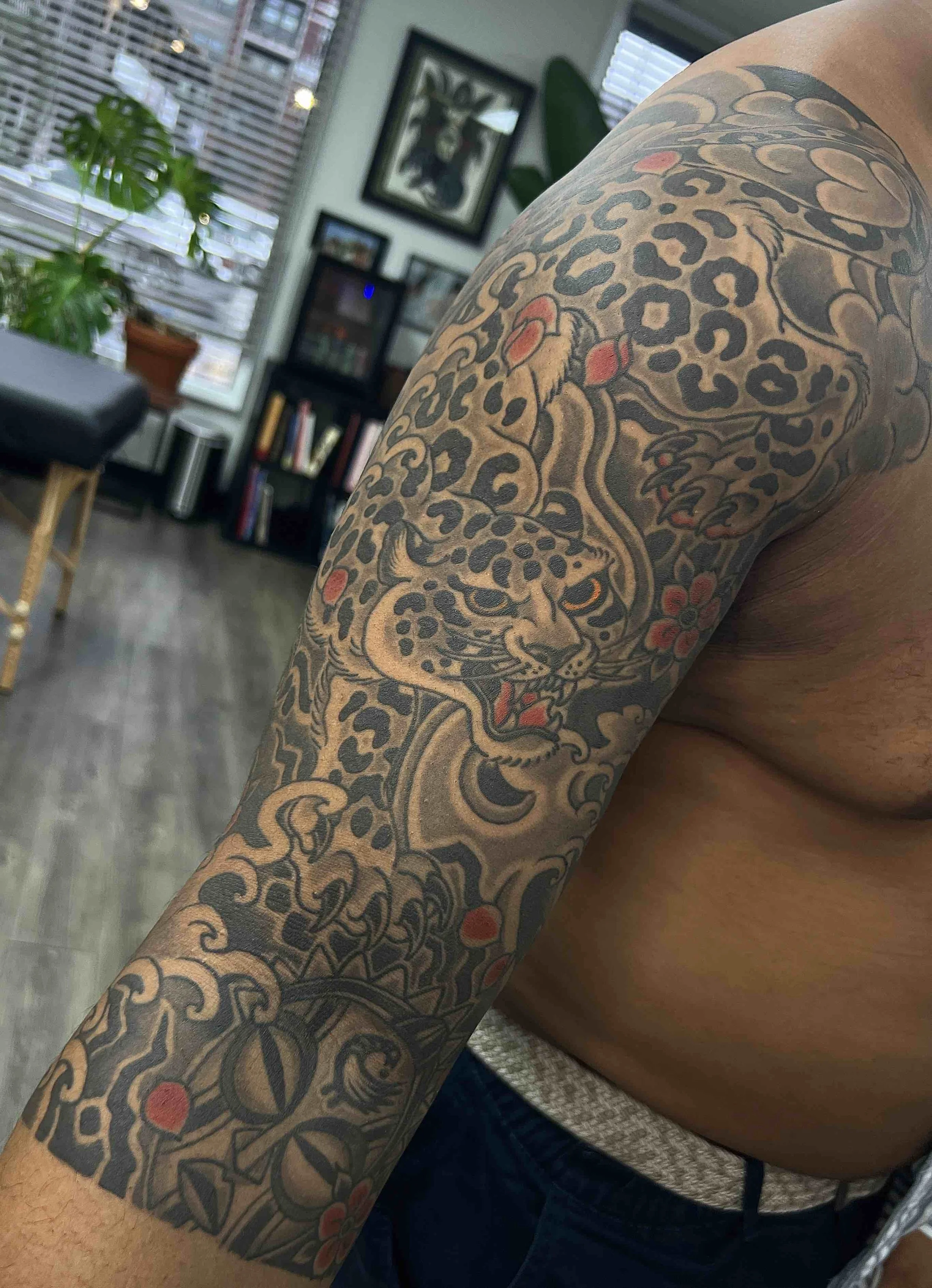
3/4 Sleeves
3/4 Sleeve tattoos extend from the shoulder to about a full hands width beneath the elbow.
This length allows for more complex main elements than a half sleeve, while still allowing the client to comfortably hide the tattoo if necessary.
Most clients who choose this length extend the project to a full length sleeve shortly after completion.
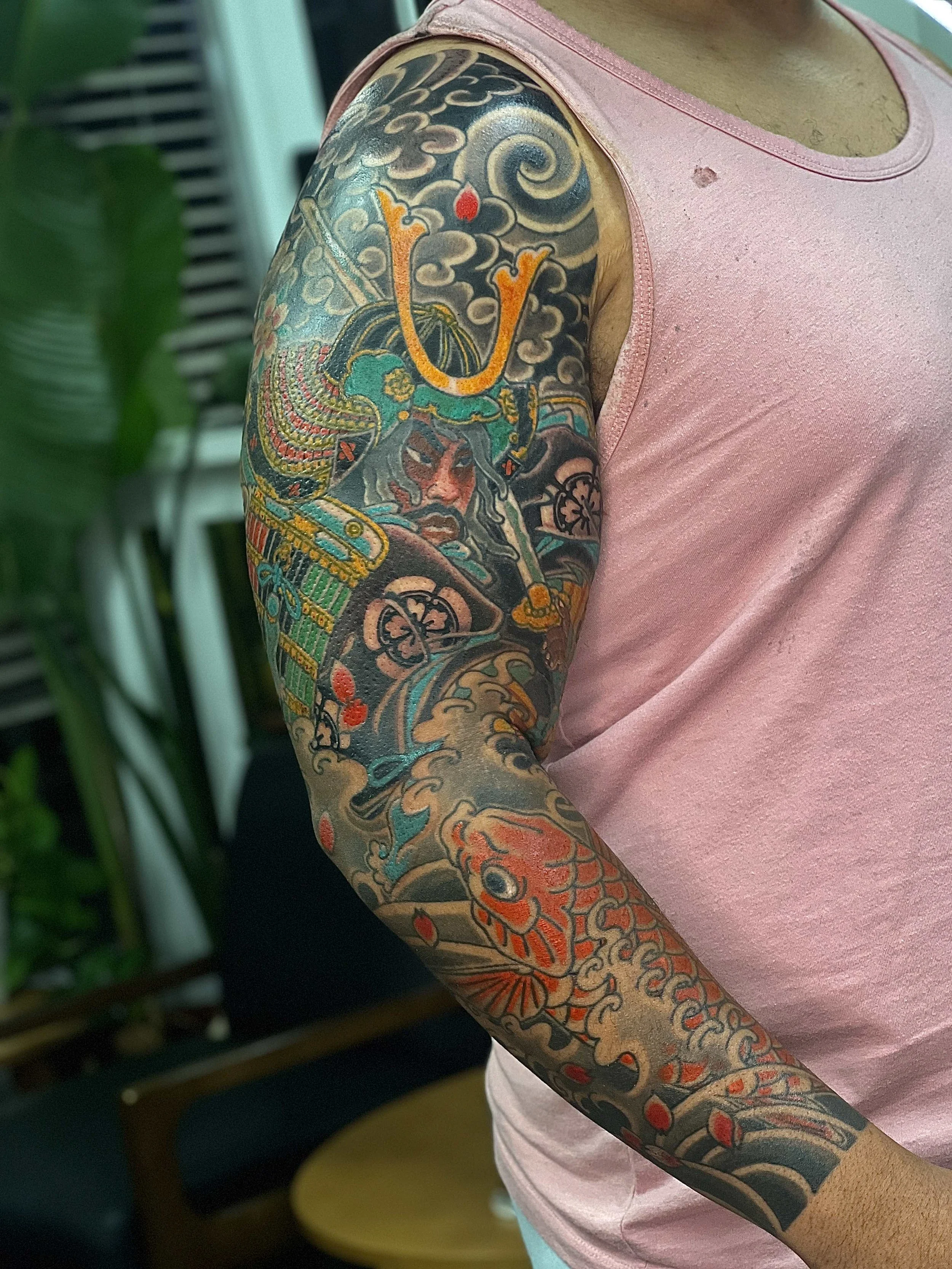
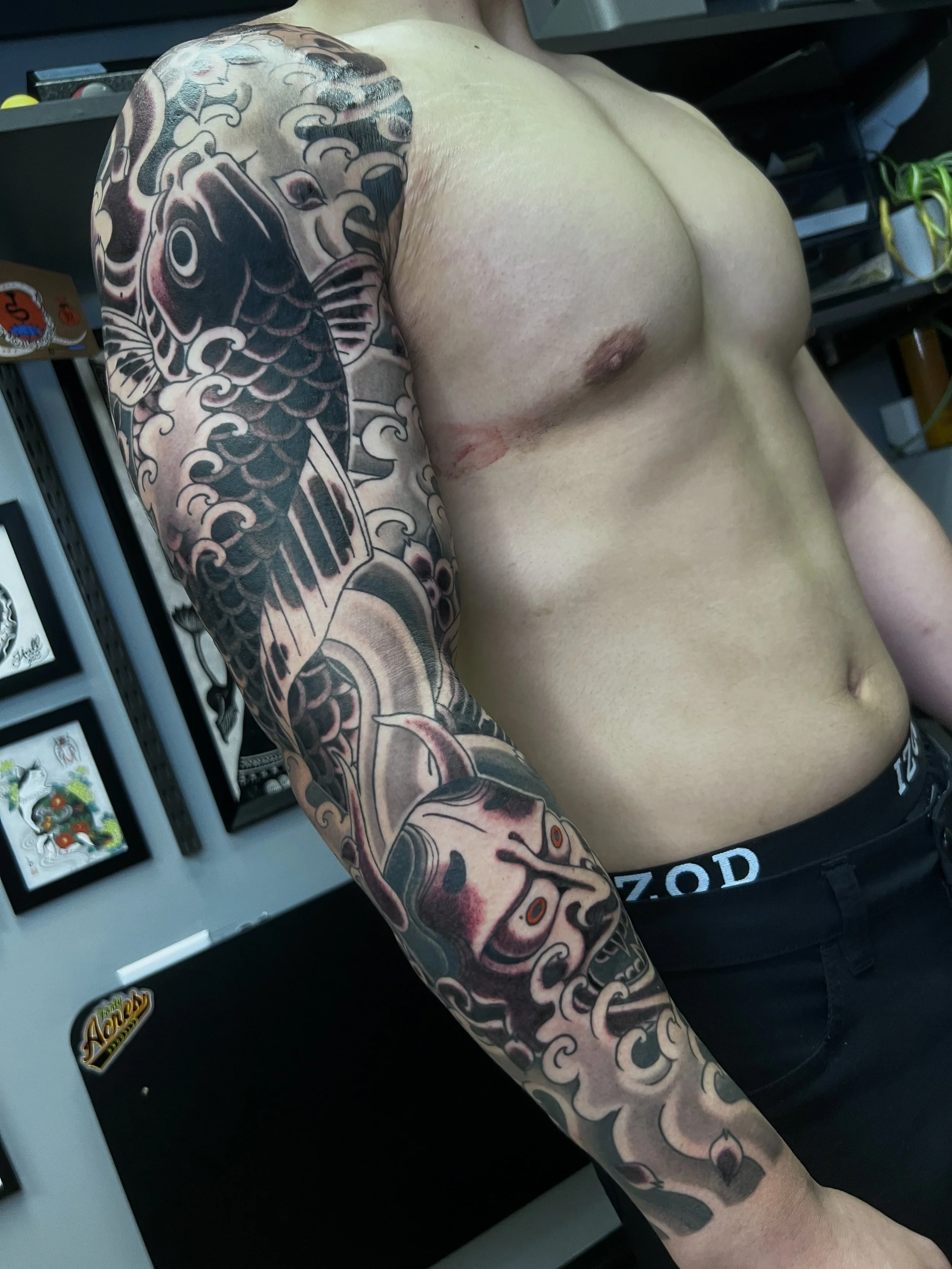
Full Sleeve Tattoos
Full sleeve tattoos extend from the shoulder to the wrist and allow for more complex storytelling.
Dragons, koi fish, and samurai imagery are placed in the focal points of the arm often arranged across the entire arm using flowing backgrounds.
Chest Panels & Back Pieces
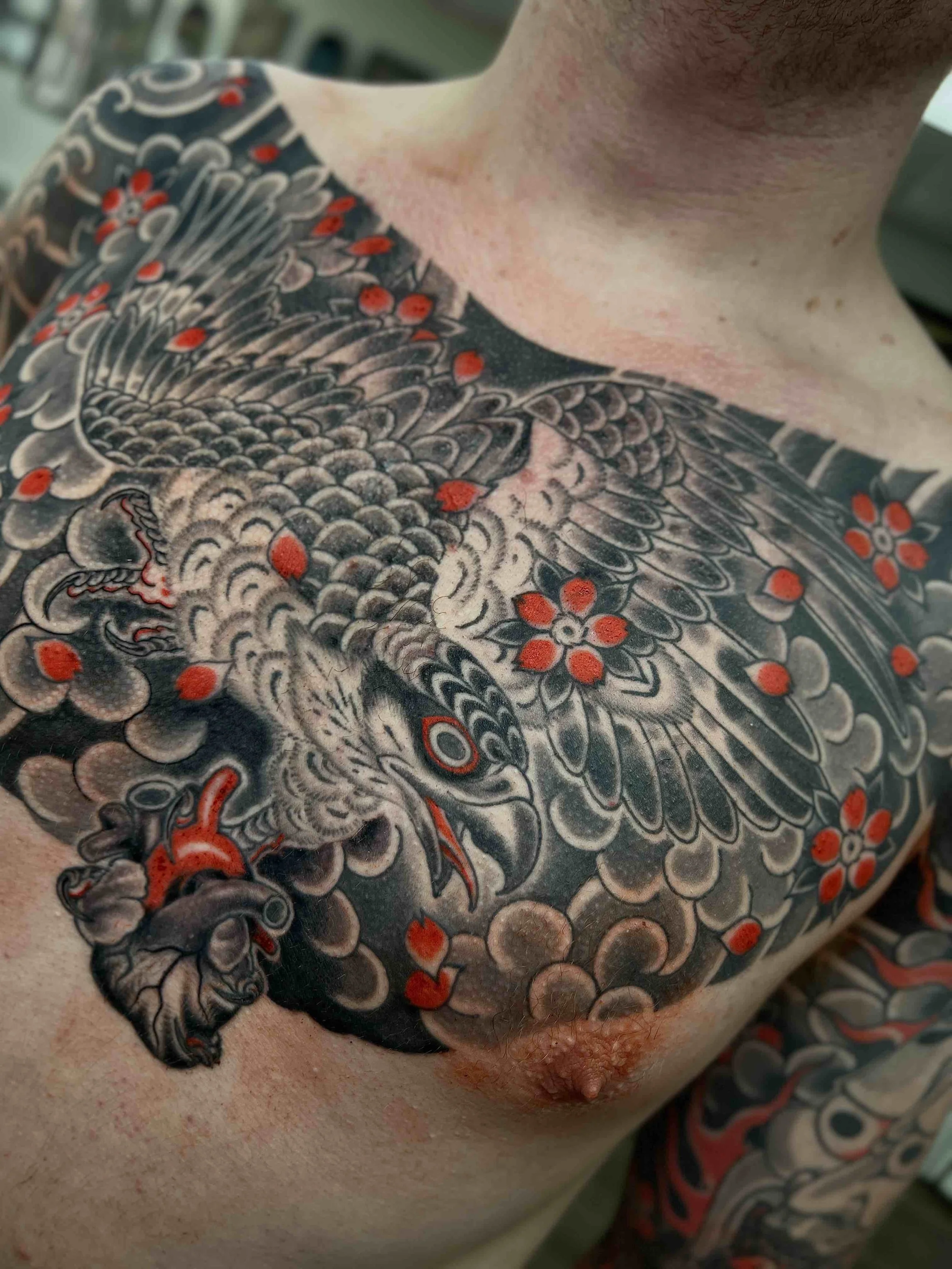
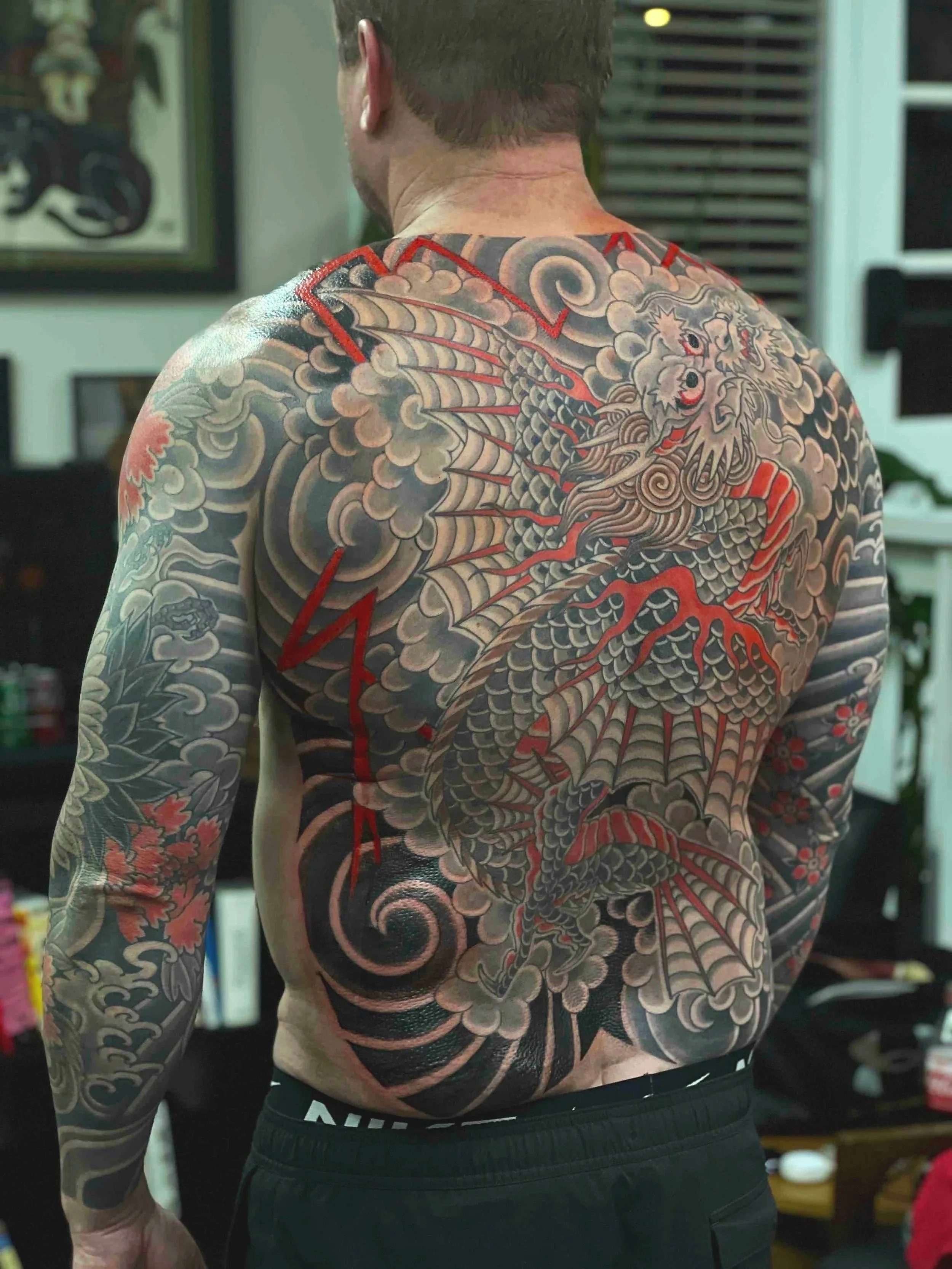
In japanese tattooing, back pieces go from shoulder down to upper/mid thigh (kame-no-koh) and serve as the center piece for eventual full body compositions. Sleeves are added later and act as framing elements for the back piece imagery.
Chest pieces can be laid out as panels known as hikae, and connected to the sleeves with a gap on the sternum - or as full coverage from sleeve to sleeve.
Both chest options can be expanded into full front torso compositions over time
Wes Holland’s Tattoo Process
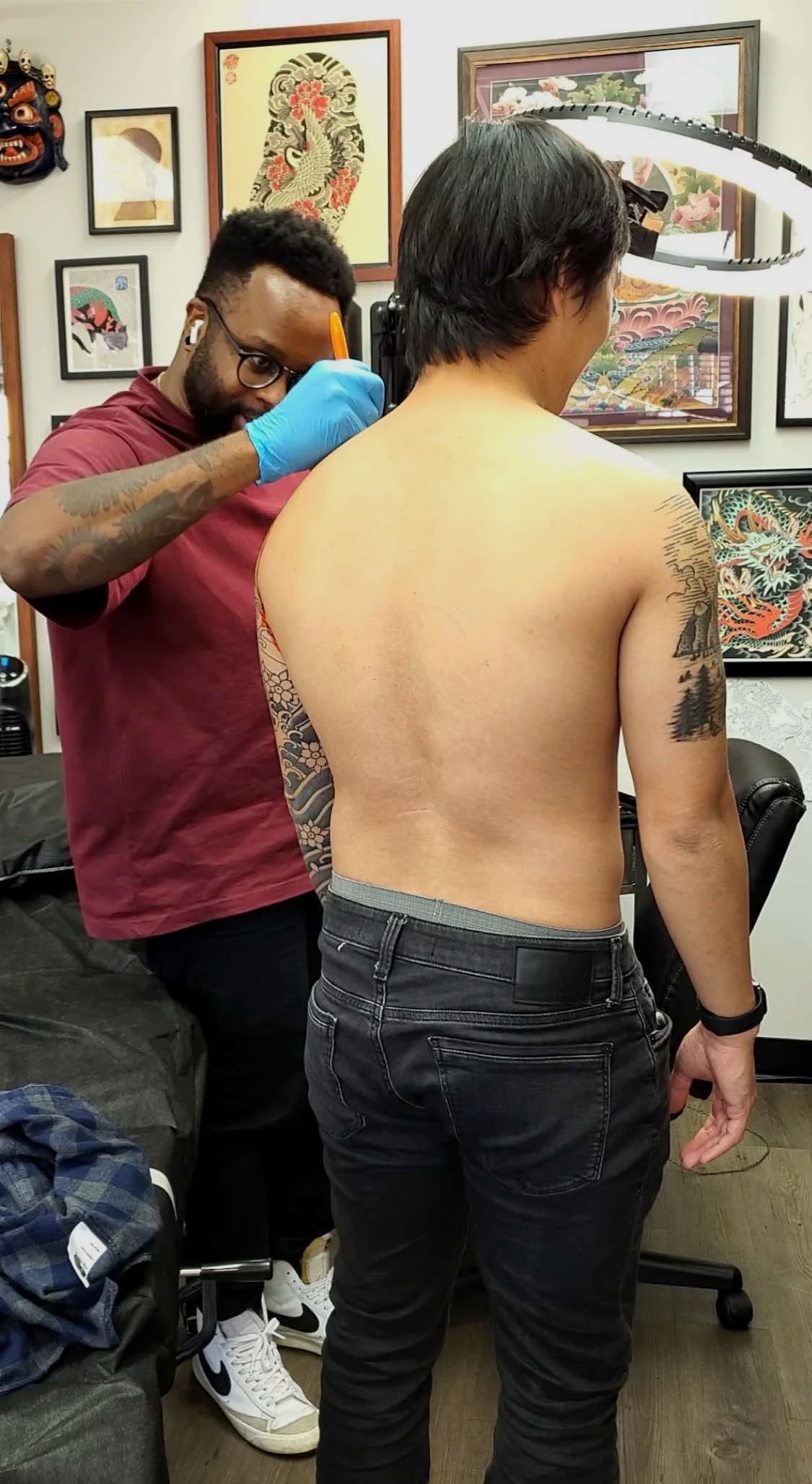
Large Japanese tattoos begin with a consultation to discuss design ideas, placement, and overall direction.
Consultation
The consultation is used to discuss imagery, size, and placement. This helps determine the best approach for the design.
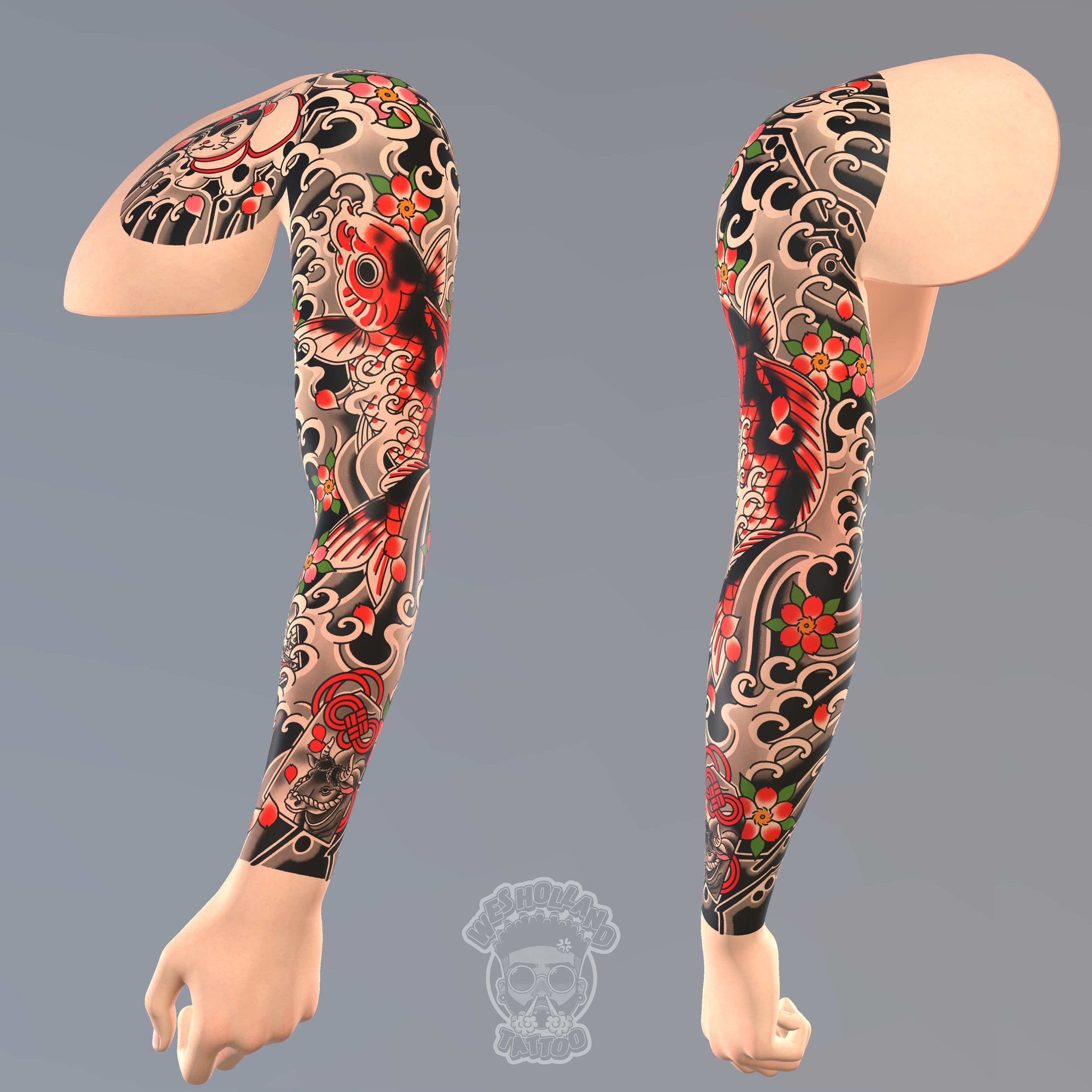
Custom Design
Every tattoo is designed specifically for the client. The artwork is created to fit the body and maintain visual balance.
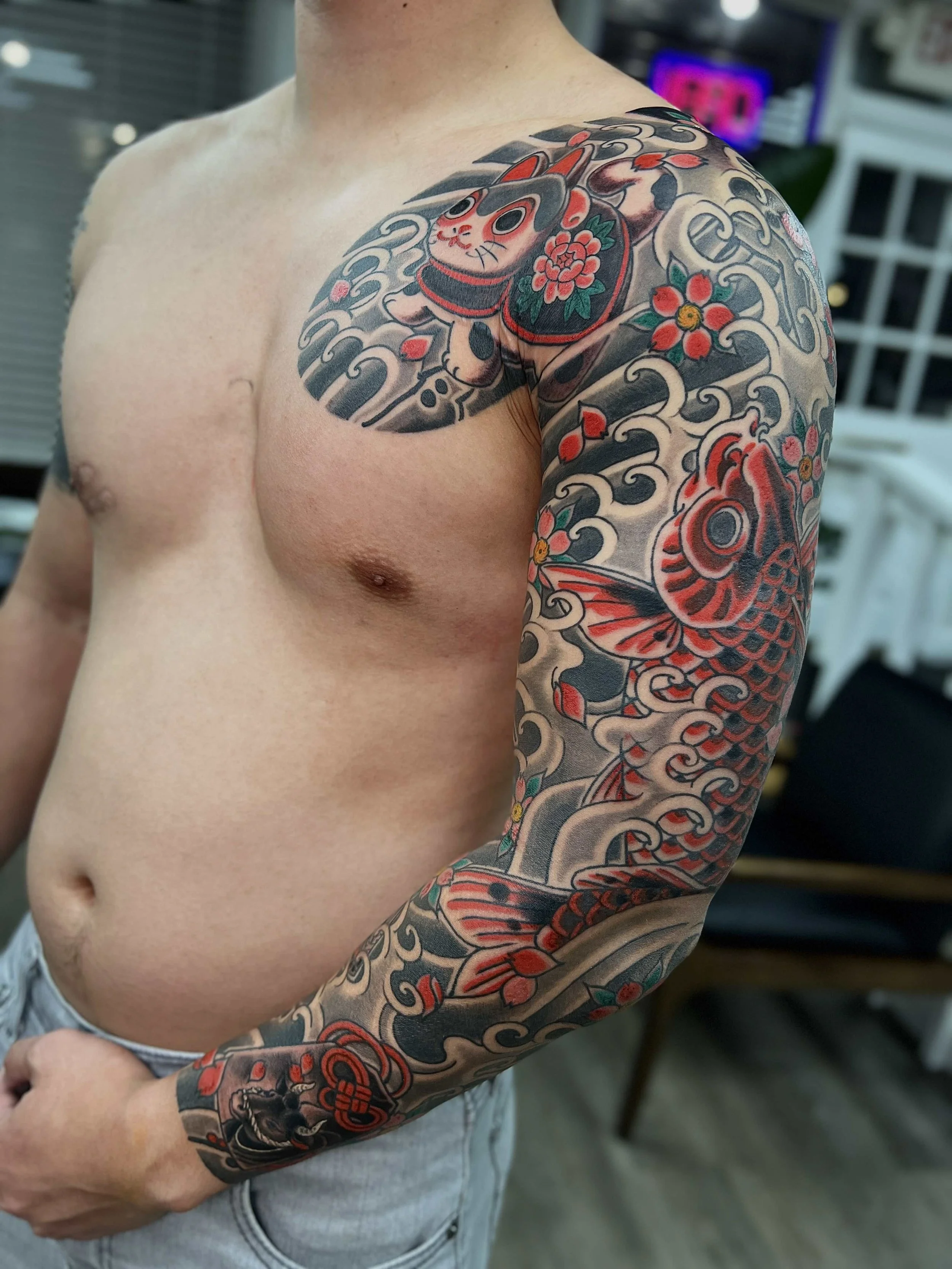
Tattoo Sessions
Large tattoos such as sleeves and back pieces are completed over multiple sessions, with weeks between for healing.
Japanese Tattoos on Dark Skin
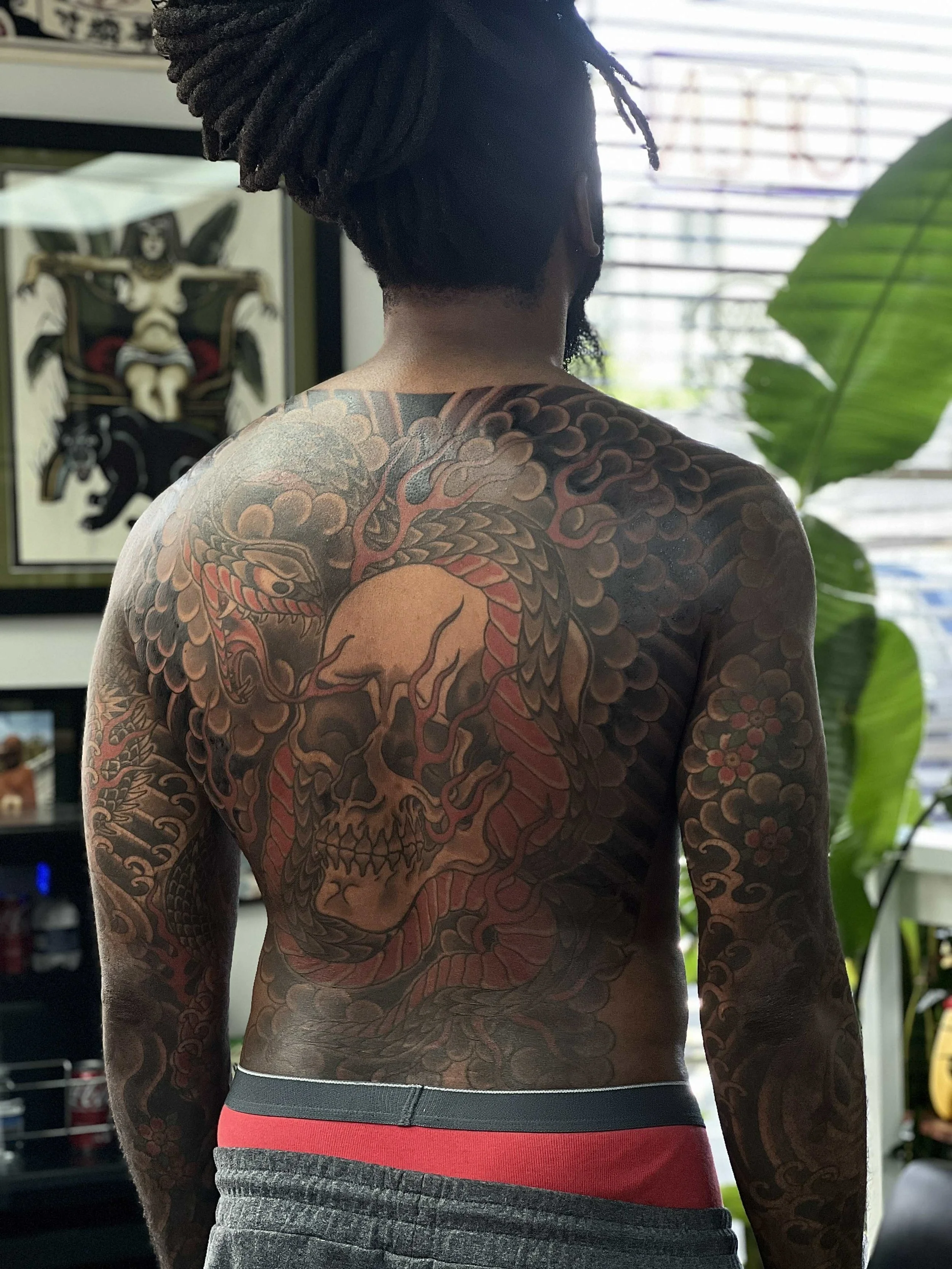
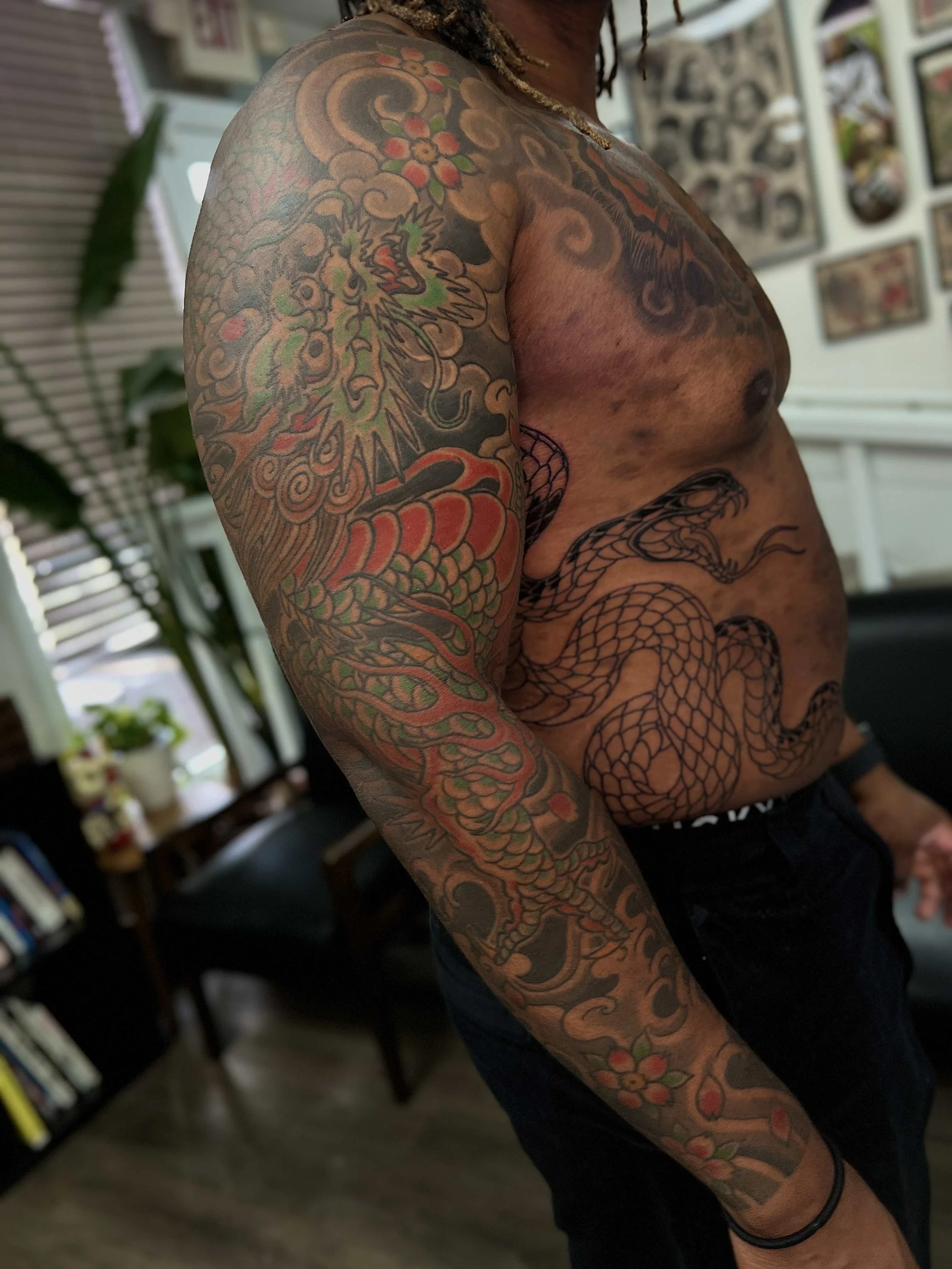
Japanese tattooing is one of the strongest styles for melanated skin tones, due to its emphasis on solid shading, bold contrast, and balanced use of negative space.
Wes Holland’s Japanese tattoos are designed with:
Adjusted line weight for visibility
Strategic sizing, placement & spacing for longevity
Color palettes selected per client for best results when healed
This ensures your remains solid and legible in real life, not just in end-of-session photos.
Japanese Tattoo Pricing
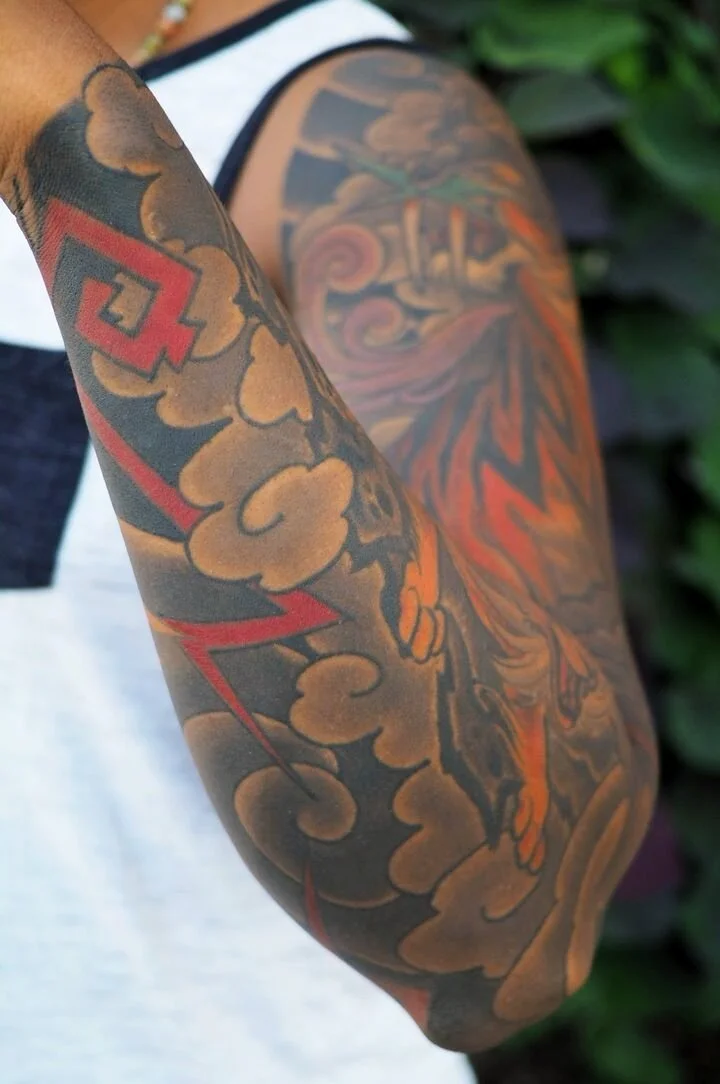
Large-Scale Japanese Projects (Sleeves & Backpieces)
Large-scale Japanese tattoos with Wes are built as full intentional compositions from the start.
$1200 per 4 - 6 hour session
Half to Full sleeves take 4 - 7 sessions
Leg sleeves & back pieces take 6 - 8 sessions
Projects are completed over multiple sessions with healing periods between, to ensure clean and consistent results.
Single-Session Japanese Tattoos
One-shot Japanese style tattoos start at $400, based on size, detail, and placement.
All designs are custom and pricing is confirmed before booking.
Tattoo Sessions at Lightwork Tattoo in Sandy Springs

Tattoo sessions take place at Lightwork Tattoo, a professional tattoo studio serving clients throughout Atlanta and nearby areas including Dunwoody, Brookhaven, Buckhead, and Midtown.
The studio provides a comfortable and professional environment for both large multi-session custom tattoos and single-session projects.
Japanese Tattoo FAQ
How long does a Japanese sleeve tattoo take?
Large tattoos such as sleeves are typically completed over multiple 4 - 6 hour sessions depending on the design and level of detail.
How much does a Japanese sleeve by Wes Holland cost?
Pricing depends on the size, complexity, and number of sessions required. A consultation helps determine the scope of the project.
In general, sleeves cost $1200 per session, and:
Half to Full sleeves take 4 - 7 sessions
Leg sleeves & back pieces take 6 - 8 sessions
For full details, see the Project Scope & Pricing section.
Do Japanese tattoos work on darker skin tones?
Yes. Wes Holland has over 16 years experience in tattooing dark skin tones.
Additionally, Japanese tattooing thrives on contrast and structure, which translates extremely well on dark and brown skin when designed properly.
What imagery is common in Japanese tattoos?
Common subjects include dragons, koi fish, tigers, and hannya masks combined with traditional background & floral elements,
What is the healing process for a large Japanese tattoo?
Healing varies by individual and by the size of the tattoo. Initial linework generally heals in 3–4 weeks. Once the outline is complete, shading and color sessions can be scheduled. Following this schedule allows the tattoo to heal comfortably and ensures consistent results.
Start Your Japanese Tattoo
Large-scale Japanese tattoos are typically planned through a consultation to discuss the design, placement, and overall concept.
Japanese Tattoo Artist for Clients in Atlanta & Surrounding Areas
Wes Holland tattoos at Lightwork Tattoo in Sandy Springs with clients throughout Atlanta, including Dunwoody, Brookhaven, Buckhead, Alpharetta, Marietta, and Gwinnett County.
Clients searching for the best Japanese tattoo artist in Atlanta choose Wes for intentionally designed compositions, large-scale mastery, and tattoos built to last on all skin tones.